
Do I Really Need a Retirement Residence Permit for Ghana? A Personal Reflection on Living, Visiting, and Staying Flexible at 70
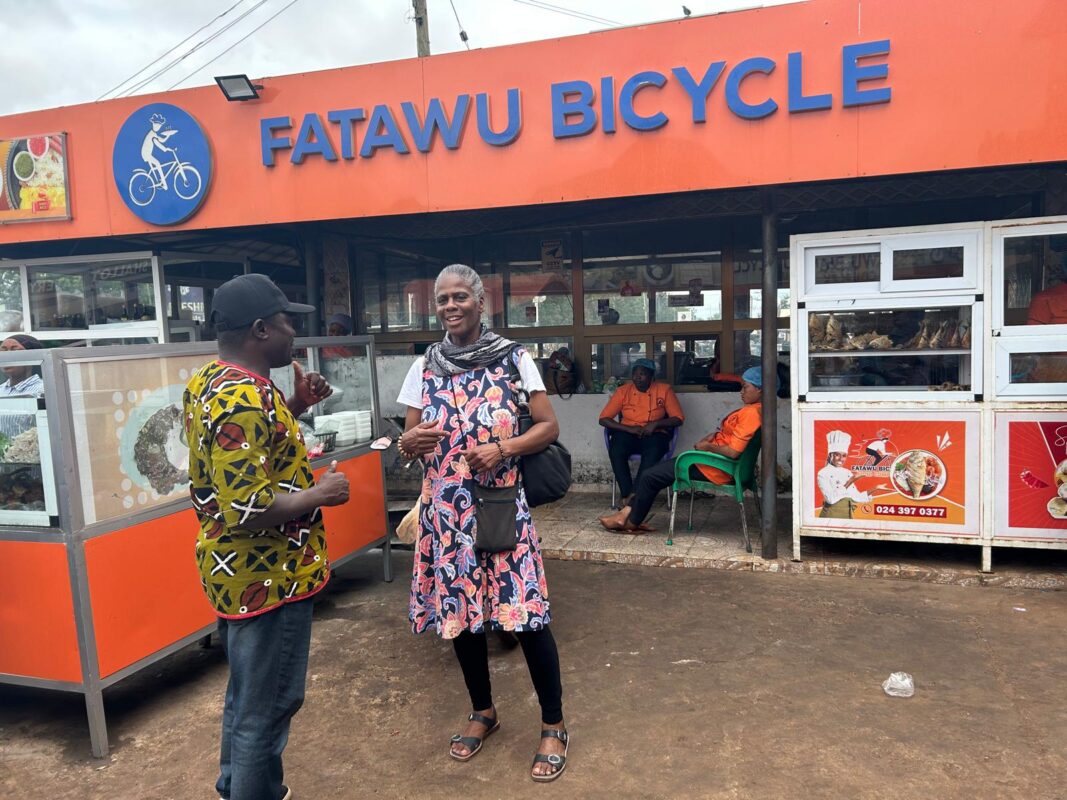
There comes a point in travel and in life when the questions shift.
Not just where do I want to go?
But how do I actually want to live between places?
Recently, I’ve been thinking about something very practical: whether I need a retirement permit for Ghana.
And the more I sit with that question, the more it opens up a much bigger one.
Do I really need residency at all?
What I Thought I Was Going to Do
At first, I was quite ready.
The idea was simple: apply for a retirement permit, make things official, and have the flexibility to spend extended time in Ghana without constantly thinking about visa renewals.
On paper, it made sense.
I am 70, in relatively good health, independent, and still active. I have Medicare, supplemental insurance in the United States, and I continue to generate a modest income from my books and early-stage affiliate work.
I am not tied to a job or a fixed location.
So naturally, I thought: why not formalize longer stays in Ghana?
Especially since I already have strong connections there. Friends, extended relationships, and a sense of familiarity built over years.
The Reality of My Life Right Now
But when I step back from the idea and look at my actual life, something else becomes clear.
My base is still the United States.
My closest family – my sisters, nieces, nephews, and immediate circle are here.
If anything were to happen to me medically or unexpectedly, this is where I would feel most supported. Not because Ghana lacks care or kindness. I have wonderful people there, but my established support system is here.
That matters more now than it might have in earlier years.
At this stage of life, realistically, decisions are not only about possibility.
They are also about practicality, safety, and ease.
What I’ve Actually Done in the Past
I’ve already spent long stretches in Ghana, up to six months at a time, which I reflect on more in my main guide on Moving to Ghana after 50.
During those visits, I simply used a tourist visa, renewing it as needed, something I also touch on when discussing the practical realities of longer stays in my article about the Cost of Living in Ghana.
It worked.
It allowed me to move freely, stay flexible, and adjust plans without feeling locked into a system.
That flexibility is something I’ve started to value more, not less.
Because I’m not only thinking about Ghana.
I also want the option to move between countries, spend time in different places, and follow curiosity rather than obligation.
The Question Behind the Question
So the real question is not just:
Do I need a retirement residence permit for Ghana?
It is this:
Do I actually want long-term residency anywhere right now?
And when I answer honestly, the response is more nuanced than I expected.
I don’t necessarily want to settle in one place full-time.
I want the ability to come and go.
To stay for months when it feels right.
And to leave when it feels complete.
Looking at Both Sides
There are advantages to a retirement permit, of course.
It offers structure, clarity, and ease of longer stays without repeated administrative steps.
But there is also another truth:
Formal residency can quietly shift your sense of flexibility.
And at this stage of my life, flexibility feels like its own kind of security.
Especially when I consider that I may also want to spend time in other countries, not just Ghana, and not always in long, fixed stretches.
Sometimes 30 days. Sometimes 60. Sometimes longer.
I don’t want to feel anchored when what I value most right now is movement.
A Different Kind of Decision
I originally approached this thinking I would move forward quickly with a retirement permit.
But now I find myself pausing.
Not out of confusion but out of clarity.
Because I am beginning to understand something important:
Not every stage of life requires more structure.
Sometimes it requires more openness.
Where I’ve Landed (For Now)
At 70, with family rooted in the United States, a support system here and meaningful ties in Ghana, but no need for permanent settlement, I am leaning toward a simpler path.
For now, I don’t think I need a retirement residence permit.
What I need more is the freedom to move between places with ease, to stay connected without being fixed, and to choose based on how life feels in the moment.
That may change in the future.
But for now, this feels right.
Final Reflection
What I’m really learning is that travel after 60 or 70 and beyond is not just about destinations.
It’s about decision-making in alignment with the life you actually have, not the life you imagine on paper.
And sometimes the most grounded decision is not the most formal one.
It is the one that keeps life simple, flexible, and honest.
If anything changes, I’ll revisit it.
But for now, I am choosing openness over structure.
And that feels like its own kind of wisdom.
If you enjoy reflections and articles like this, you’re welcome to join me.
I share thoughtful notes on writing, travel, and living fully – by email and at a pace that allows us to breathe.