
Traveling in Uncertain Times
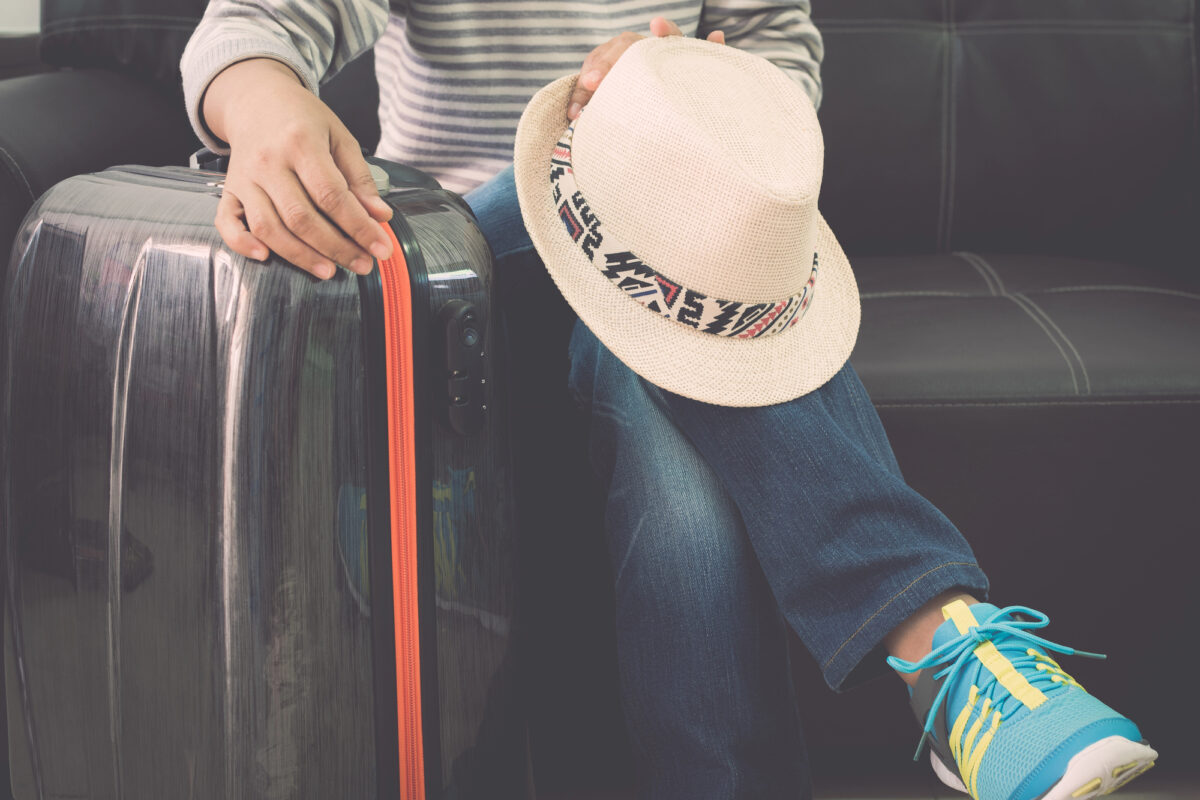
Traveling in uncertain times. Stay close to home, or keep exploring?
For the past six or seven years, I’ve made it a habit to take at least one major international trip each year. Travel has never been just a pastime for me. It has been a way of life, a way of learning, and a way of staying connected to the wider world.
But this year, 2026, feels different.
With so much uncertainty in different parts of the world, I find myself pausing in a way I have not before, not out of fear, but out of awareness. There’s fighting in several regions, tensions involving multiple countries, and an overall sense that the world feels less predictable than it once did.
When conflicts involve many nations, travel becomes more complicated, and not just emotionally, but logistically, as well. Air routes can change. Flights can be cancelled. Borders can close. Immigration policies can shift quickly. Even travelers who are not directly involved in any conflict can feel the ripple effects.
These are the kinds of thoughts that now sit quietly in the back of my mind as I consider where to go next.
For the first time in years, it is already April, and I still have not decided on my next international destination. That hesitation alone tells me something has changed, not just in the world, but in how I approach travel.
The Two Perspectives I Am Weighing
Lately, I find myself weighing two very different perspectives.
One option is to stay closer to home and travel within the United States. After all, this is my primary country of residence, and there are certainly many places to see. I have lived in several states including Maryland, Texas, New Jersey, New York, Michigan, and Ohio, and have traveled through California, Virginia, and beyond.
Yet, I must admit something honestly: domestic travel, while convenient, does not carry the same sense of novelty for me as international travel does.
Perhaps it is because I have spent so many years living in different parts of the United States. When I travel abroad, everything feels fresh – the languages, the rhythms of daily life, the warmth of local hospitality, and the cultural richness that comes from stepping into a completely different environment.
International travel, especially to countries in Africa, holds a special place in my heart. Ghana, in particular, feels like a second home. Nigeria also carries deep personal meaning for me. Even now, as I consider my next trip, I find myself leaning toward Kenya. And if not Kenya, perhaps Ireland or Scotland. These are places that have long been on my list.
Traveling During Uncertain Times Is Not New to Me
This is not the first time I have traveled during uncertain times. In fact, one of my most unforgettable travel experiences happened at the very beginning of the COVID-19 pandemic.
In early 2020, I was in Ghana when the world began to change almost overnight.
News reports showed rising cases and deaths across Europe and the United States. While I was there, I traveled briefly to Nigeria and then returned to Ghana, arriving just about twelve hours before the borders closed completely.
Land, air, and sea travel were shut down.
Suddenly, I was in a country where leaving was no longer an option.
For weeks, we watched the news, unsure of what would happen next. Eventually, I was able to leave Ghana on a government-arranged evacuation flight organized by the United States.
Even after landing back in the U.S., the journey was far from normal. Travel across states felt eerie and unsettling. Airports were quiet. Roads were empty. The world felt paused.
That experience taught me something important:
Travel has always carried risk. What changes during uncertain times is not the existence of risk, but our greater awareness of it.
How My Travel Decisions Are Changing
These days, my travel decisions are guided by closer observation and more thoughtful planning.
I listen to the news more carefully. I monitor which countries are involved in conflicts and how those situations might affect flights, flight routes or border policies.
One practical change I now consider more seriously is routing. I prefer direct flights whenever possible. I try to avoid complicated itineraries that pass through regions experiencing instability. These are small decisions, but they make a difference in reducing uncertainty.
Living Fully, Even With Awareness
Despite all of this, I still believe that life must go on.
Travel has always required a willingness to step into the unknown. Even in the best of times, delays happen, weather shifts, and unexpected challenges arise. What feels different now is the scale of uncertainty, not just personal, but global.
Still, I am not ready to stop traveling altogether.
Instead, I find myself approaching travel with a deeper sense of awareness. I am more deliberate. More observant. More willing to pause before making decisions.
Perhaps this will be the year I explore more within the United States. Or perhaps I will find myself boarding a flight to Kenya, Ireland, or Scotland after all. The destination remains undecided, but the desire to travel also remains strong.
For now, I am learning to balance curiosity with caution.
Because while the world may feel uncertain, the desire to explore, to connect, and to experience new places does not disappear. It simply evolves.
And maybe that is what traveling in uncertain times truly looks like. Not stopping completely, but moving forward with greater awareness, wiser choices, and a renewed appreciation for every journey we take.
Why Foot Health Matters When You Travel (Especially in West Africa)
This article contains affiliate links. As an Amazon Associate, I earn a small commission from qualifying purchases with no extra cost to you.
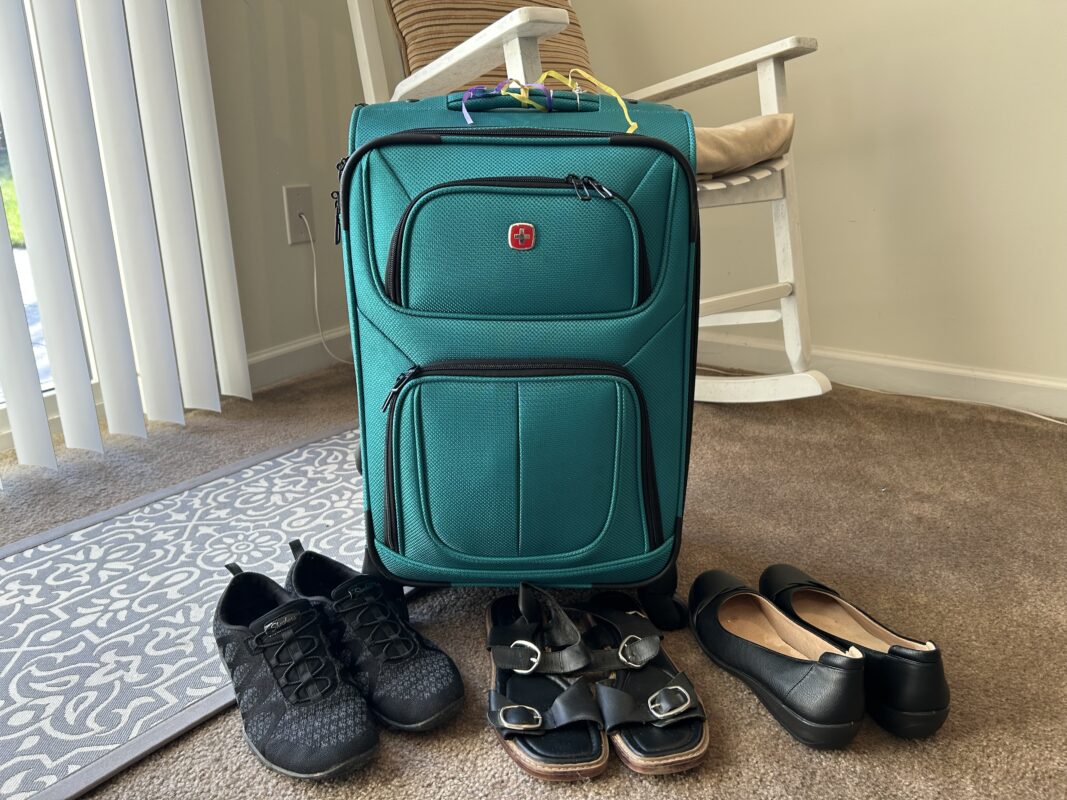
At this stage in my life, I don’t take my feet for granted. Good foot health means freedom, especially when I travel.
Now in my 70s, I’m grateful for a decision I made years ago: choosing comfort over fashion. I wore high heels in my younger years, but not for long. Over time, I began to prioritize what fit well, what supported my feet, and what allowed me to move with ease. Today, that choice has paid off.
And when I travel, especially to places like Ghana and Nigeria, in West Africa, I am even more intentional. Because there, your feet are not just along for the journey, they carry you through it.
Why Foot Health Matters More Than You Think
Travel, particularly in West Africa, is not always about smooth pavements and predictable paths. You may find yourself walking through busy markets, along uneven roads, across grassy areas, or through wet or dusty terrain.
Add to that long airport walks, standing in lines, and the natural swelling that comes with long-haul flights, and you begin to understand why foot health matters.
When your feet are not comfortable, your entire travel experience changes, and not for the better.
Healthy, protected feet allow you to move confidently, explore freely, and truly enjoy where you are.
Over the years, I’ve learned that the right footwear plays a major role in maintaining foot health while traveling.
The 4 Types of Footwear I Always Travel With
Over time, I’ve learned that a small, thoughtful selection of footwear makes all the difference. These are the four types I always carry.
Comfortable Sneakers (My Go-To)
I always travel in comfortable sneakers. For me, that usually means lightweight, breathable, slip-on styles – something like these cushioned walking sneakers that are easy to put on and take off, especially at the airport.
I prefer shoes that look like they have laces but don’t, and I often choose black because it goes with everything.
More importantly, I look for shoes that allow my feet to breathe and have a little give. When you travel, your feet can swell and having that extra room makes a big difference.
Sneakers also protect my feet whether I’m walking through busy open-air markets, navigating uneven roads, or exploring areas where the terrain is unpredictable. They shield my feet from dust, insects, and anything else I might encounter along the way.
When I travel, I want my feet covered, protected, and comfortable, especially on long flights and busy travel days.
On flights, I always wear socks with my sneakers. Often, I choose compression socks for travel, which help with circulation and keep my feet comfortable during long journeys.
Sandals (When the Setting Is Right)
There are times when I want my feet to breathe, especially in warm weather. That’s when I reach for a good pair of comfortable travel sandals that work well with dresses, skirts, capris, as well as jeans.
But I wear them selectively. Sandals are best for smoother environments, such as indoors, at a mall, or in places where I know the terrain is easy.
In more rugged settings, I avoid them. Sandals can catch on uneven ground, and they don’t offer the same level of protection as sneakers.
Elegant Flats (For Dressier Moments)
I also carry a simple pair of elegant dress flats for those occasions when I want to look a bit more polished.
They allow me to dress up without compromising comfort, which is something I value more and more these days.
Sturdy Flip-Flops (A Small but Essential Item)
This may seem simple, but flip-flops are one of my essentials. I always take along slip-resistant flip-flops.
I use them indoors so I don’t track dirt from outside shoes into living spaces. I also use them in the shower, especially in unfamiliar places, because I prefer not to stand barefoot on those surfaces.
They’re easy to clean, quick to dry, and useful in so many situations, from the shower to the beach. They provide better traction in wet areas, which adds a layer of safety and peace of mind, which is a very important consideration at my age.
Lessons I’ve Learned About Foot Health
One of the best decisions I made years ago was to stop prioritizing fashion over comfort. That choice has stayed with me, and today, I see the benefits clearly.
Healthy feet are not something you fix later. They are something you protect over time.
Choosing comfort is not giving up style, it is about choosing longevity.
Simple Tips for Keeping Your Feet Healthy While Traveling
- Choose breathable, flexible shoes
- Allow room for swelling during travel
- Protect your feet in unfamiliar environments
- Keep a pair of indoor or shower shoes
- Select comfort first – style can follow
- Wear moisture-wicking socks when traveling
Closing Thoughts
Travel is meant to be enjoyed. It’s meant to be experienced fully, without unnecessary discomfort.
And when your feet are supported, protected, and comfortable, you move differently. You walk longer. You explore more. You feel at ease.
In the end, taking care of your feet is not just about health – it’s about freedom.
Preparing thoughtfully makes all the difference, which is why I also share more essentials in my article on 5 Simple Things I Now Always Pack for Long Haul Travel.
5 Simple Things I Now Always Pack for Long-Haul Travel

This article contains affiliate links. As an Amazon Associate, I earn a small commission from qualifying purchases with no extra cost to you.
There was a time when I packed for every possible scenario, just in case.
Over time, and after traveling back and forth between the U.S. and West Africa, I’ve learned something simpler:
It’s not about packing more.
It’s about packing better.
There are a few things I now carry with me every single time, not out of habit, but because experience has taught me their value.
1. My Essentials (Health Comes First)
I never travel without my medications, so I make sure to cover my entire stay, plus a little extra.
They stay in their original, labeled containers, tucked safely into my carry-on. It’s one of those things you hope you won’t need urgently, but you’re always glad to have handled the matter properly.
Alongside that, I also carry:
- my anti-malarial medication
- and something for traveler’s diarrhea
Not glamorous, but absolutely necessary.
2. A Few Small Comforts for the Flight
Long-haul flights have taught me to respect comfort.
Compression socks (#CommissionsEarned) have made a noticeable difference for me, especially on those long stretches in the air. They’re a small thing, but one I no longer skip.
And then there’s my shawl.
It has served me as:
- a light blanket on cold flights
- a wrap on cool evenings
- and occasionally, a respectful cover in more conservative settings
One simple item with many uses.
3. Staying Connected (Without Stress)
My phone, of course, is essential, but I’ve learned not to rely on just that.
I always travel with:
- my chargers
- a mobile charging bank (#CommissionsEarned)
- and a mobile Wi-Fi device (#CommissionsEarned)
There’s a certain peace of mind that comes from knowing you can stay connected when you need to, without any issues.
4. The “Just in Case” Items I’ve Learned to Respect
Experience has humbled me in this area.
I now always pack:
- my prescription glasses (even though I wear contacts most of the time)
- an extra contact lens case
- and enough contact lens solution to last my trip
Because losing a contact lens or lens case in the middle of a journey is not an experience I care to repeat.
5. Comfort You Can Walk In
These days, I choose comfort, but I still like a touch of elegance.
I usually pack:
- a pair of flat, comfortable shoes that work with dresses or shorts
- and my go-to Skechers sneakers (#CommissionsEarned) for walking
Because no matter where you are, being able to move comfortably makes all the difference.
A Few Final Things I Quietly Appreciate
There are always a few extras that find their way into my bag:
A simple, unscented deodorant (not always easy to find everywhere)
A cotton handkerchief – it’s still one of the best things for hot, humid days
And a small notebook, (#CommissionsEarned) because I often find myself wanting to write while I’m away
Nothing complicated. Just thoughtful.
Final Thoughts
I’ve learned that packing well isn’t about being prepared for everything.
It’s about understanding what matters to you.
These days, I travel a little lighter, a little wiser, and with far fewer “just in case” items.
But the few things I do carry?
I carry them with intention.
Reversing the Lens: Africans in China, Chinese in Africa
This article contains affiliate links. As an Amazon Associate, I earn a small commission with from qualifying purchases with no extra cost to you. I only recommend books I’ve personally read or genuinely find worth sharing.
Since the 1980s, I have been aware of Chinese migrants in places like Nigeria and Ghana.
You see them. Not in one place, but everywhere, in small, steady ways. In markets. Walking along the roadside. Sitting quietly in hotel lobbies. Riding motorcycles. Sometimes accompanied by a local assistant, sometimes moving about on their own.
Over the years, their presence has become part of the landscape.
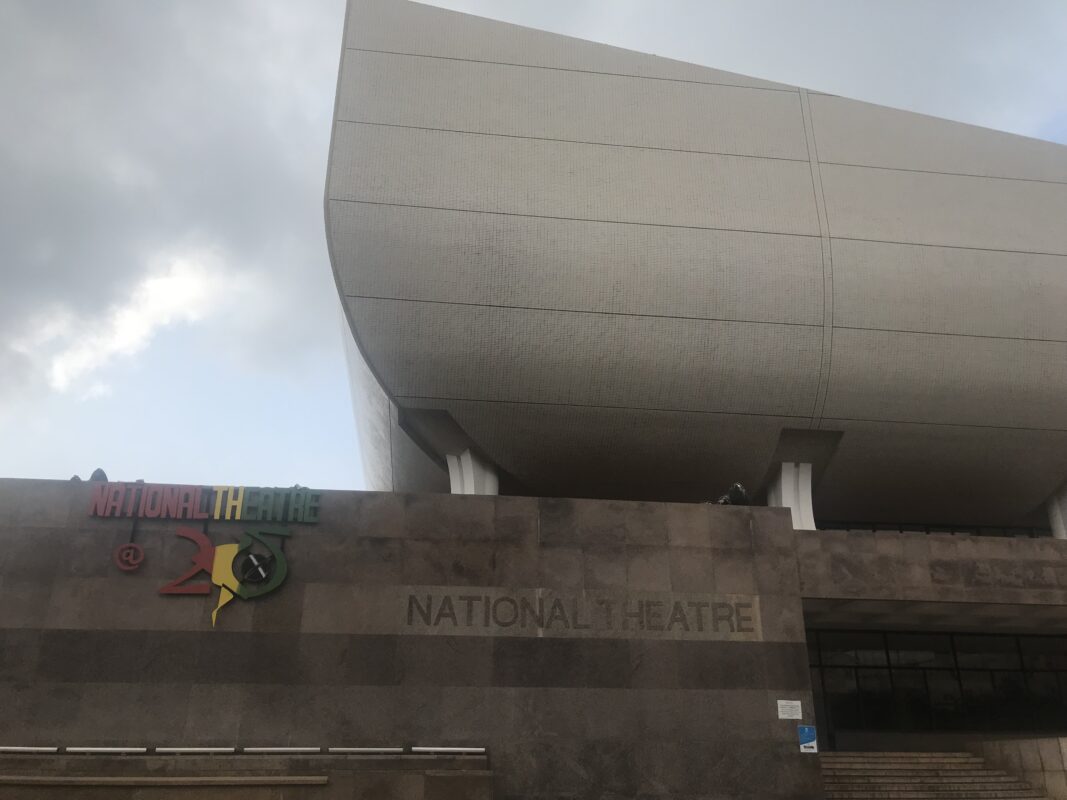
You see them working on large infrastructure projects such as roads, highways, and overhead bridges. You notice Chinese lettering on shipping containers. You see Chinese-owned shops, restaurants, and commercial spaces like the China Mall in Accra.
They are not fully integrated, for the most part. Many keep to themselves, as communities often do in unfamiliar places. But they are undeniably present. Living. Working. Building lives.
And like any presence of this scale, it is layered.
There are opportunities and partnerships. There is trade. There are also tensions around issues like illegal mining (galamsey), fishing practices, and the exploitation of natural resources such as timber.
Both realities exist at the same time.
Over time, you also begin to notice quieter shifts. Intercultural relationships. Marriages. Children of mixed heritage. Life, in all its complexity, finding its way forward.
And so, for many years, I observed all of this without questioning it too deeply.
It was simply part of the rhythm of everyday life.
Reversing the Question
What happens when we reverse the lens?
If Ghana and many parts of Africa are open, welcoming, and relatively accessible to foreign entrepreneurs and migrants, what happens in the opposite direction?
What is the experience of Africans who move to China?
Is the welcome the same?
Is the openness mutual?
Is the ease of building a life comparable?
A Book That Made Me Pause
That question stayed with me.
So when noted Nigerian travel writer, Pelu Awofeso, mentioned the book Black Ghosts: A Journey into the Lives of Africans in China, written by Noo Saro-Wiwa, #CommissionsEarned, on LinkedIn, I was immediately intrigued and I bought it without hesitation.
Reading it has been like stepping into a totally different world.
Through her explorations and writing, neighborhoods in China come alive via markets, apartment blocks, and gathering places where African migrants live and work. Her descriptions are so vivid that I often feel as though I am walking alongside her.
There is even a place informally known as “Chocolate City” in Guangzhou – a reference that, in many parts of the world, signals a concentration of Black life and culture.
I had never imagined such a place existing in China.
And yet, there it is.
What I Noticed
What struck me most was not just the setting it was the atmosphere too.
As I read, I could feel the tension in certain moments. The uncertainty. The careful navigation required to live in a place where your presence can feel precarious. Or is unlawful.
It made me reflect more deeply on contrast.
Because while Chinese migrants in Ghana may face challenges, they are, on the whole, able to establish businesses, move about with relative freedom, and build visible lives.
The experience described in Black Ghosts suggests something more complicated, and at times definitely more constrained and inhospitable for Africans in China.
A Quiet Reflection
And so I found myself returning to a thought I have long held:
On the whole, Africans are among the most welcoming, accommodating, and hospitable people in the world.
Not perfectly. Not without tension. But broadly, and consistently.
Reading this book has not given me all the answers.
But it has sharpened the question.
And sometimes, that is where understanding begins.
Light Creeping In

The day does not begin with a sudden burst from night to morning. No, it arrives slowly, like a gentle visitor easing its way into the world.
Dark skies shift first to deep gray, then to silver blue. Dramatic streaks of red and orange slice through the horizon, while soft swaths of pale-yellow filter downward. From my bed, I watch the light’s gradual entrance, its beams dancing across the tall teak closet at the foot of my bed.
The wood’s natural swirls of rich browns, soft golds, and warm tans, come alive under the golden glow. The windowpanes behind me cast a crisscross of light across the doors, and the patterns shimmer, flicker, and then fade as the sun climbs higher.
Outside, the brilliance of sunrise retreats into the full blaze of day. The closet remains, still beautiful, but somehow less magical without the sun’s fleeting stamp of gold.
No matter. Sunrise always returns, bringing its eternal reminder: beauty is not only seen in the light of day, but in those in-between moments when night surrenders to morning and the world awakens to possibility.
This reflection is part of my Listening to the Day series exploring the quiet unfolding of mornings in Ghana. Here’s another one you might like: The Neighborhood Awakens.
Inside Ghana’s Centre for Plant Medicine Research
For years, I’ve been curious about plant medicine, not the vague, unregulated kind, but the scientific kind. The kind that asks real questions, such as:
- What’s actually in the plant?
- How does it work in the body?
- What’s the correct dosage?
- And most importantly – is it safe?
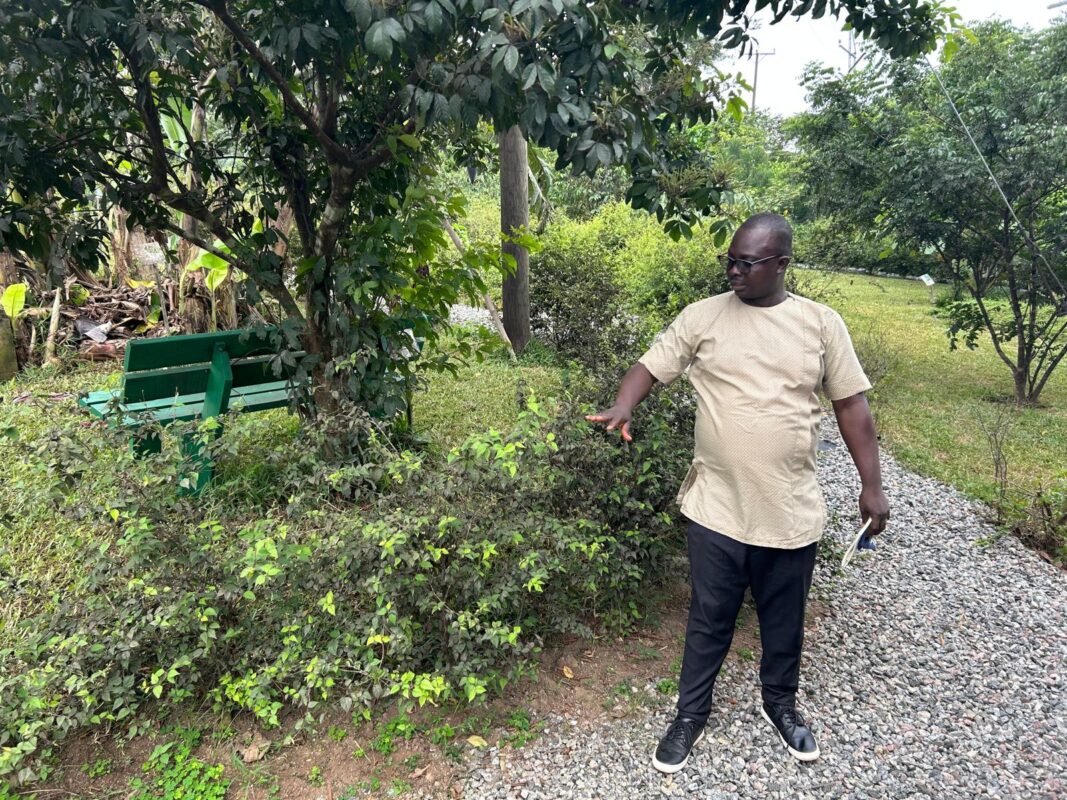
That curiosity led me to Ghana’s Centre for Plant Medicine Research, a national institution quietly doing rigorous, evidence-based work at the intersection of traditional knowledge and modern science.
What I discovered during my visit and interview surprised me in the best way.
This is Not Folk Medicine. It’s Research.
Let me be clear about something right from the start.
The Centre for Plant Medicine Research is not a collection of backyard remedies or spiritual healing practices. It is a scientific research institution staffed by highly trained professionals: botanists, agronomists, pharmacologists, microbiologists, chemists, and medical doctors, many with advanced degrees and dual training in both orthodox and herbal medicine.
Here, medicinal plants are treated the same way pharmaceutical drugs are treated elsewhere: They are identified, tested, standardized, and regulated.
Researchers don’t just say a plant “works.” They isolate its active chemical compounds, measure concentration, study how those compounds interact in the body, and test for safety, toxicity, and microbial contamination.
From Field to Formula
One of the most fascinating aspects of the Centre’s work is how methodical the process is.
It begins with plant identification and conservation. The Centre maintains multiple conservation sites and herbaria – living libraries of medicinal plants – ensuring that species are accurately identified and sustainably cultivated. This is especially important in Ghana and across West Africa, where overharvesting has pushed some medicinal plants toward extinction.
Once harvested, plant materials move through a carefully controlled pipeline:
- Phytochemical analysis to identify active ingredients
- Microbiological testing to ensure safety
- Dosage formulation to prevent over, or under-treatment
- Clinical observation and trials where appropriate
Only after passing through these stages can a product move forward.
FDA Approved
One of the most reassuring things I learned is that all Centre-produced medicines go through Ghana’s rigorous FDA approval process. This means they are tested, reviewed, and certified before reaching the public.
This matters, especially for people like me, who want alternatives to Western prescriptions but still value regulation, data, and safety.
Many of the Centre’s formulations address conditions that are increasingly common both in Ghana and abroad:
- Hypertension
- Diabetes and pre-diabetes
- Stress-related conditions
- Digestive issues
- Immune support
- Chronic infections
- And many other conditions that affect people in Africa and globally
The approach is often slower and more gradual than Western pharmaceuticals, but is also gentler on the body, with fewer aggressive side effects when used correctly and under medical guidance.
Doctors Trained in Both Worlds
Another detail that stood out: All of the clinicians working at the Centre are fully trained medical doctors who later specialized in herbal medicine. Others begin in herbal medicine and receive extensive biomedical training.
Patients visiting the Centre’s outpatient clinic (OPD) undergo proper consultations, vital checks, lab testing, and follow-ups, just as they would in a conventional hospital. If a condition requires orthodox treatment, patients are referred accordingly.
This is not an “either/or” model. It’s integrative medicine, grounded in evidence.
Why This Matters, Especially Now
Around the world, more people are questioning one-size-fits-all healthcare. They want options. They want transparency. They want treatments that work with the body, not just override symptoms.
The Centre for Plant Medicine Research offers something rare: A scientifically credible model for traditional medicine in a modern healthcare system.
For me personally, this visit wasn’t just educational. It was affirming. I left with a deeper respect for what’s possible when ancestral knowledge is honored and tested, rather than dismissed or blindly accepted.
Plant medicine doesn’t have to be mysterious to be powerful. Here in Ghana, it’s being studied, measured, and practiced with care.
If you’re curious to learn more about the work being done at Ghana’s Centre for Plant Medicine Research, you can visit their official website here.
A Soft Haven in Accra: My Afternoon at Yena’s Nest
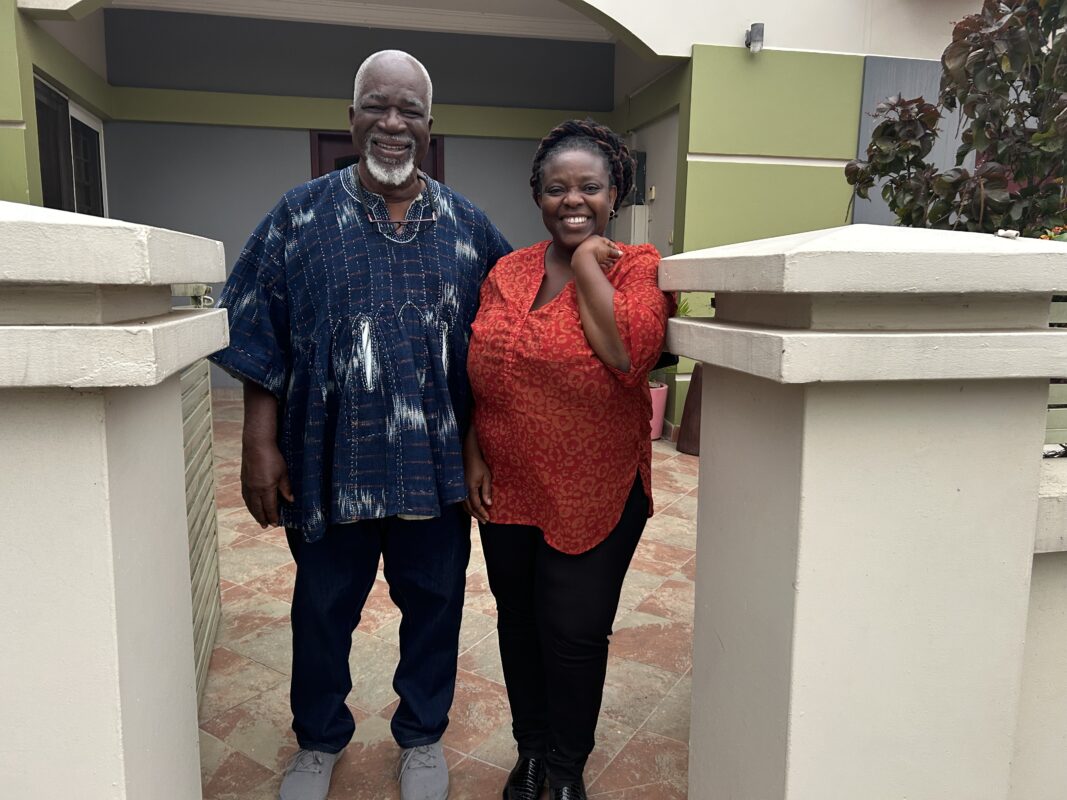
When I stepped through the gate at Yena’s Nest, I felt like I was walking into someone’s home. It felt that way, because I was.
There was no stiff reception desk, no forced smiles, no sense that you were just another passing guest. Instead, Yena and her husband, K.K., welcomed me like an old friend who’d come back after a long journey.
I had come to learn more about this little bed and breakfast (B&B) tucked inside a quiet Accra neighborhood, but I left with so much more than notes for an article. I left with a reminder that true hospitality isn’t just about sheets and pillows and breakfast buffets. It’s about people. It’s about a woman who treats every traveler like an unexpected cousin, a friend, family, and who quietly shows us that home can follow us anywhere in the world.
A Dream Rooted in Wanderlust
Over tea in their cozy living room, the kind of space where you automatically sink in and start talking about life, Yena told me how this place came to be. She spoke about her love for travel, her hunger to see the world – the same spirit that made her buy the house before even telling K.K. She laughs about that now, but you can feel the quiet pride too.
Together, they turned this building into a soft landing spot for travelers from every corner. Each piece of furniture, every warm touch, says: Stay as long as you like. You’re family now.
Not Just a Bed
What sets Yena’s Nest apart isn’t just its tidy rooms or its convenient location, though both are true. It’s the way Yena herself is woven into every stay. She cooks. She chats. She’ll babysit your child so you can slip away for an hour of freedom. She might even teach you how to stir up a proper Ghanaian stew, right there in her open kitchen.
When guests arrive, she tells me, they stop being “guests.” They become an extension of her family. And you believe her, because you can feel that this is not a marketing tagline. It’s how she lives.
Where Stories Gather
One of my favorite moments came when she spoke about her guests’ stories – the families with young children, the missionaries from Korea, the solo wanderers seeking a peaceful corner of Accra. Some find their way here after searching for Airbnbs online; some, she says, simply knock on the door and hope for a room.
She laughs about gently turning away the kinds of guests who are looking for an hour stay. “That’s not us,” she says firmly, with a protective smile. “This is a home.”
More Than the Bed and Breakfast
Yena’s Nest is just the beginning. They’re dreaming bigger: a campsite near Wli Waterfalls in the Volta Region, a hostel for budget travelers. Even her farm where she’s learning to coax rice and coconuts from the land, feels connected to her vision of giving people somewhere to belong.
A Place I’ll Return To
I left Yena’s Nest with my notebook full, but my heart was full too. I came to spotlight a guesthouse. I left with the warmth of people who believe in taking care of strangers like family. That’s the kind of story I want my readers to know. That’s the kind of place I’ll return to. It’s the kind of place I’ll take you along with me, page by page.
If you ever find yourself in Accra, craving more than just a bed for the night, find your way to Yena’s door. She’ll open it like she’s been waiting for you all along.
The Neighborhood Awakens

The day begins early here. Before the sun rises, the neighborhood is already stirring. The Imam’s call to prayer floats through the dawn between four and five, answered by the shuffling of early risers.
From my armchair by the window, book in hand, I listen. Good morning greetings drift in English and Twi. Parents coax sleepy children awake. Buckets clank as kids fetch water from the neighborhood tap. Gates slide open, engines start, taxis honk, vendors call out. A woman passes by balancing “sweet bread” on her head. Her hands are free, and her voice rises above the morning chorus.
The air fills with the aroma of breakfast cooking. Birds sing, dogs bark, children laugh (or cry, if they are not yet ready to get up). Step by step, sound by sound, the town comes alive.
And then, almost unnoticed, the sun joins the chorus, spilling its glow across the people below.
This reflection is part of my Listening to the Day series of short morning meditations on sounds, stillness, and living fully.
Coffee Before the Sun

“Ease into the day.” It’s one of my favorite sayings, and one I live by. For me, it begins before the sun, when the house is still wrapped in quiet and everyone else is asleep, or just gently stirring behind closed doors.
This is my Mary time. A moment to make that first cup of coffee and let the aroma drift through the air like a gentle promise. Strong coffee, a teaspoon (well… maybe a teaspoon and a half) of sugar, and a splash of cream until it turns that warm golden color that I like so much. It’s café au lait for me, no matter the season. No matter the temperature. No matter where I find myself in the world.
Nothing is so important that I would skip this ritual. It is a small, delicious gift I give myself every morning. The warmth of the cup in my hands, the rich taste of beans from Kenya, Colombia, or wherever the world’s farmers have grown them, lingers on my tongue and in my spirit.
After my coffee, I’m ready. Ready to ease into the day.
Morning coffee is more than a drink; it’s a reminder that joy doesn’t wait for the grand moments – it’s right here, in the quiet beginnings. Good morning.
This reflection is part of my Listening to the Day series of short morning meditations on sounds, stillness, and living fully.
Listening to the Day: When the Rain Comes First
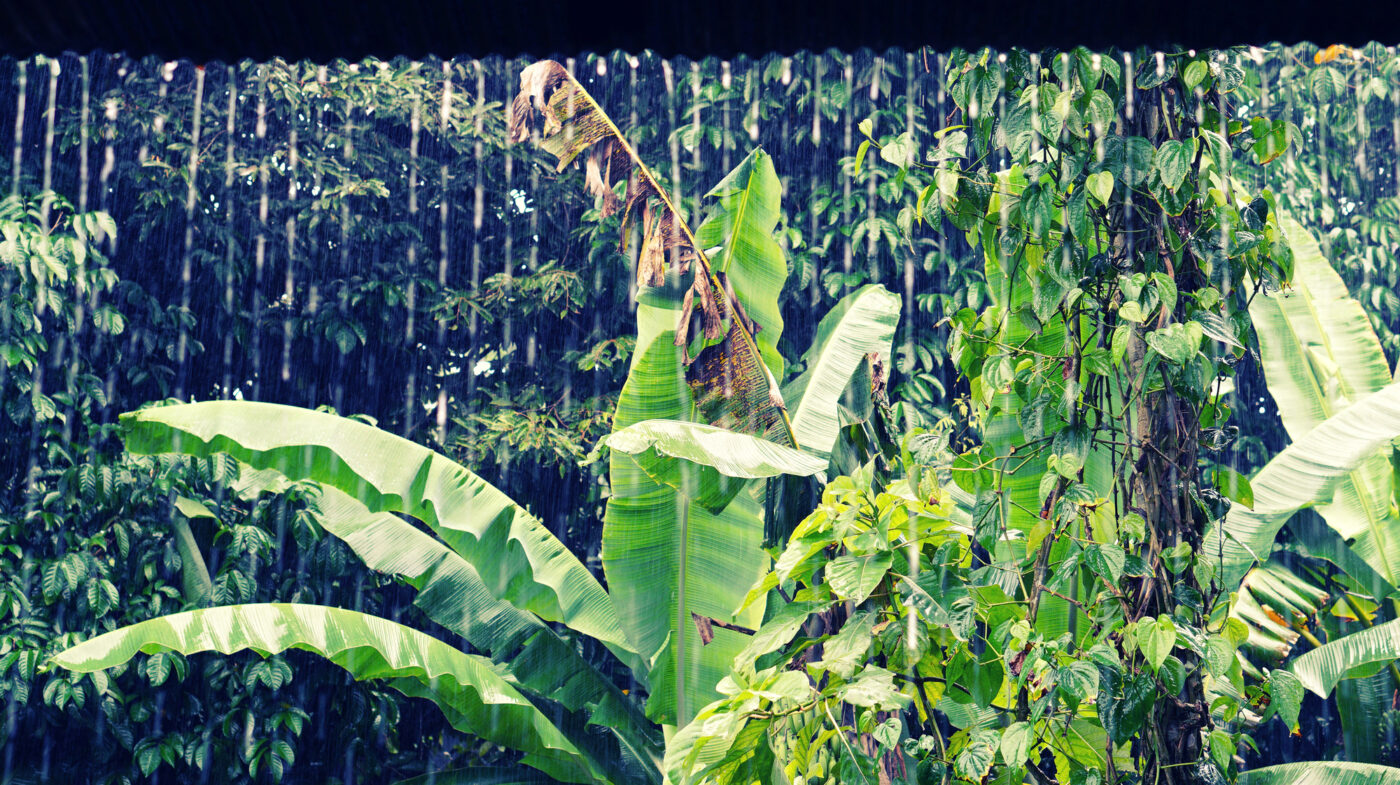
This morning, the day didn’t begin with roosters or birds. It began with rain.
There’s something about the rainy season in West Africa that makes me feel both grounded and alive. I’m most productive when it rains. Maybe because the rhythm of raindrops on the roof keeps me company as I write. Or maybe it’s because the rain itself insists that we slow down and listen.
I love the way it transforms the world around me. The fresh air, the way everything suddenly smells clean and new. The lush green that follows, bright and unapologetic. Even the puddles feel like little blessings, reflecting the sky.
Rain is a reminder that life refreshes itself. That we, too, can pause, reset, and come back greener, softer, stronger.
So this morning, I’m grateful for the rain. Not just because it cools the air for a moment, but because it cools the spirit, too. And as I sit here, windows open, notebook nearby, I’m reminded of this; sometimes the best days begin when the rain comes first.
This reflection is part of my Listening to the Day series, short morning meditations on sound, stillness, and living fully.