
Where Should You Live in Ghana? My Favorite Areas for Women Over 50
One of the questions I hear most often is:
“What’s the best place to live in Ghana?”
My answer is always the same:
“Tell me what kind of life you want.”
If you’re planning a move to Ghana, you may enjoy my complete guide, Moving to Ghana After 50, where I walk through the entire relocation process from planning to settling in.
There isn’t one perfect place to live in Ghana. There is only the place that best fits your lifestyle, personality, budget, and priorities.
Before you start comparing neighborhoods, start by asking yourself a few questions.
What’s important to you? Think about what you want daily life to look like where you live.
Questions to Ask Yourself Before Choosing a Neighborhood
Do you want a walkable neighborhood?
Walking has always been one of my favorite ways to get to know a neighborhood. I make it a point to greet people along the way because greetings are an important part of everyday life in Ghana.
I learn the landmarks – where small shops and businesses, places of worship, open-air markets, and nearest grocery stores are located, as well as banks and ATMs, beauty salons, malls, bus stops, and so much more.
Walking has always been one of my favorite ways to discover a neighborhood, which is one reason I’m such an advocate for taking care of your feet, especially as we get older. If you’d like to learn more, you may also enjoy my articles, Healthy Feet Matter More Than We Think and Why Foot Health Matters When You Travel.
So the walkability factor is very important for me. Wherever I live, it’s important to take morning, and sometimes evening walks around the neighborhood to increase my understanding of the personality of the neighborhood.
Do you enjoy nightlife?
I am early to rise and early to bed. So nightlife is not an important consideration for me, although the idea of an occasional night out to a sophisticated spot popular with a mature, seasoned crowd, cool mellow music, drinks, food and good company is not ruled out. Especially when I have visitors.
Do you prefer quiet surroundings?
As I get older, quieter, gentler environments have become more important to me. Some cities are quite loud and busy, and filled with hustle, bustle and traffic, from early morning to late at night. And sometimes, there are the sounds of generators during the occasional power outage.
However, the sounds of people calling to one another, exchanging greetings, and children playing do not bother me in the least. In fact, they are a pleasant reminder that I am immersed in the culture of the neighborhood.
Do you feel more comfortable living among expats?
Some expats and foreigners, including retirees, prefer to live in communities with other expats and retirees. It gives them an added sense of community and security in some ways.
Me? I prefer to live in local neighborhoods where most Ghanaians live. I guess that makes sense given my preference of immersing myself in the people and culture of Ghana.
Also, I am quite comfortable doing that because I am definitely bicultural as a Nigerian American who grew up in both Nigeria and the United States. Living like the local folks is seamless in my experience, but for many people coming from Western countries, it may not be so seamless.
Do you love coastal living?
I am a water person who likes being around the ocean. Close enough to see the water, hear the water, or be on the receiving end of ocean breezes. Are you a water person too? Or do you prefer hillside views or lush rainforest scenery?
For water lovers and beachgoers, Ghana works well because of the long coastline along the Atlantic Ocean and miles and miles of beaches and sandy shores.
Do you prefer cooler weather?
It can get tropical hot and humid in Ghana for most of the year. A good respite from that is up in the hilly and mountainous areas of Ghana where you can enjoy higher altitude breezes and cooler temperatures.
Do you want to retire abroad or just live abroad part-time?
Many people, myself included of course, look to Ghana as a place to retire, or live in for months at a time. One reason Ghana appeals to many retirees is that, depending on your lifestyle, the cost of living can be significantly lower than in many parts of the United States.
Do you plan to live alone?
Will you be living solo, or will family members be living with you too? Another thing to ask yourself is whether family and friends will be visiting and staying with you, and for how long?
When I decided to rent my four-bedroom apartment in the Accra area, I did so because I knew I would need extra bedrooms for family members when they visited for weeks at a time, or in the case of my nieces, for the entire summer.
Do you want to be able to get around near and far?
At my age now, access to reliable transportation and roads is a must.
In order to get around I use Bolt, Ghana’s most widely used ride-hailing service, which will come where I am and pick me up.
Being able to easily walk to a main street in the neighborhood and hail a passing taxi is also very important to me. Why? Because there were a few times when my ride-hailing app did not work because I did not have enough internet data on my phone.
Maybe you’re the type of person who doesn’t go out regularly. In this case, pick a neighborhood that has everything you need located in close proximity to your apartment or house.
By the way, I choose not to own a car and drive myself when I’m in Ghana. That’s just me.
Do you want the best for what you can afford?
There is a wide range of housing options in Ghana, and where you live and your lifestyle preferences will determine where you can afford to live.
Once I’d answered these questions for myself, choosing where to live became much easier.
Areas I’d Encourage You to Consider
So where would I suggest living if you’re considering retirement in Ghana? Especially if you’re over 50, or even over 60, like me?
Here’s my take: Look at the areas where most foreigners live as a starting point.
But, before that, it’s a good idea to think about the lifestyle you want for yourself, and your preferences because that will determine which areas might be better for you.
In Ghana, or wherever I find myself, I also take into consideration who I may know in the neighborhood that I am thinking about living in. I’m going to pick an area where I know at least one person.
That brings me to another point. We are similar, and yet very different when it comes to personality types.
Are you the type of person who can make friends anywhere you go? Or find a community wherever you go? I ask this because that’s going to be a very important factor in choosing the right neighborhood for you.
One challenge some of us face as we grow older is that it can often be harder to meet people and develop genuine friendships.
Some of us are lifelong introverts and find it extra challenging to go out and meet people. If that sounds like you, your chances of feeling quite lonely are greater when you live in certain areas.
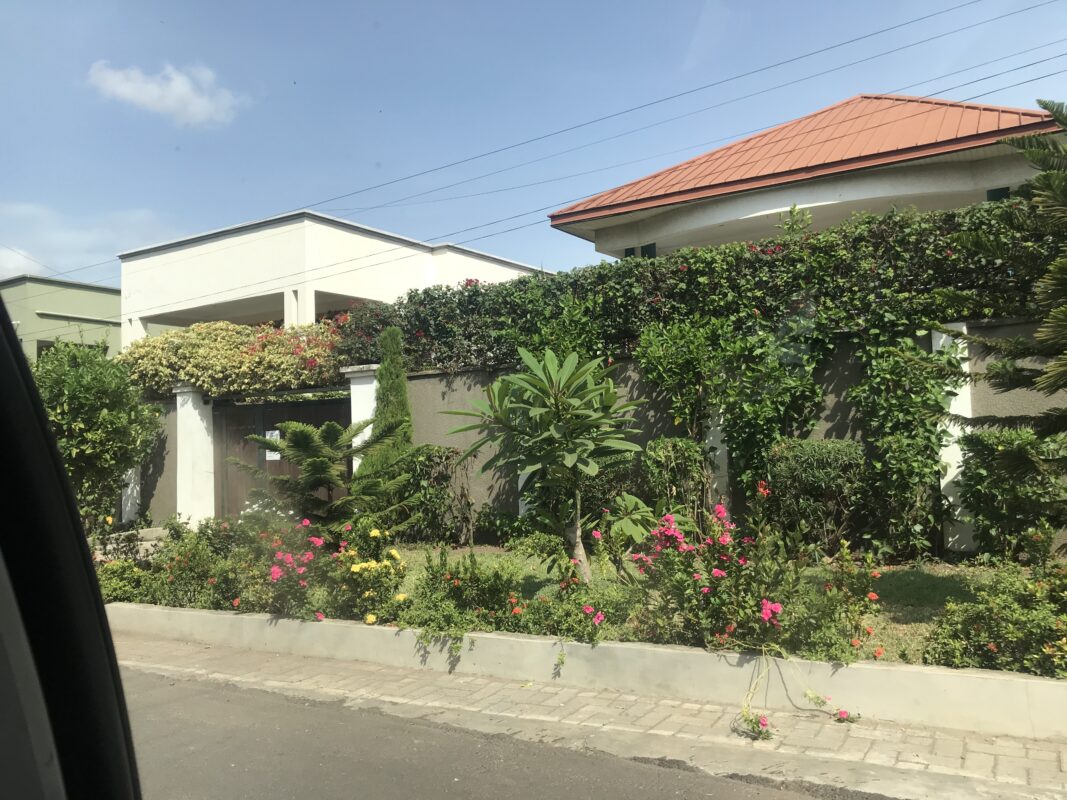
If you’re like me, a woman who enjoys being by the water, beaches, and coastlines, then you may be attracted to certain neighborhoods and not others. Fortunately, Ghana has a wide variety of beautiful places, outside the capital city of Accra.
There are rainforest areas, hills, mountains, grassy savannahs, as well as towns, cities and villages to choose from. It all depends on what you want.
Once you’ve determined your preferences in terms of landscapes, amenities, and community opportunities, you can look at what Ghana has to offer you in terms of living space.
The main areas where expats tend to live in enclaves are primarily in Accra, followed by Tema, Cape Coast, Aburi and Kumasi. So, we can take a look at some specific Accra neighborhoods, and a more general look at the other areas.
Accra Expat Neighborhoods
I’ve always thought that just like people, neighborhoods have their own personalities.
East Legon
East Legon is one of Accra’s most upscale residential neighborhoods with gated compounds, luxurious apartments and townhomes, pools, and security. Located close to the international airport, the area’s residents include retired professionals, families with children, foreign diplomatic staff, expats, and the occasional celebrity.
Nearby amenities include, shops, markets, supermarkets, renowned international schools and several universities, including Islamic University. There are also excellent restaurants, and sophisticated bars and nightclubs. Something for everyone who can afford it.
I enjoyed strolling around the neighborhood during one summer when my niece attended Vivies Dance and Theatre Academy It definitely had that neighborhood with children feel.
Cantonments
Cantonments could just be the most high-end, prestigious neighborhood in Accra, and indeed, the whole country. It is quiet, very exclusive, and very expensive. It is where you will find ambassadors and other diplomats living, as well as ranking military personnel, corporate executives, and high net worth Ghanaians and expats. Tree-lined, quiet, and heavy on security, many embassies are located here.
Airport Residential
Airport Residential is another prestigious, highly sought-after area of Accra. According to some reports, this is the neighborhood where a majority of expats choose to live.
The neighborhood is safe and peaceful, and located just minutes from the international airport, central Accra and the business district. A well-planned community, it features high-end accommodation types, including gated communities, apartments, townhomes, luxury apartments and short-stay rentals. The homes often include pools, staff quarters, and all the modern amenities.
Spas, gyms, shops, businesses, the best international schools and healthcare facilities, restaurants, rooftop clubs and bars abound. And so much more. The Accra Mall is also nearby.
Who lives here, you may wonder. Residents include wealthy professionals, diaspora members, diplomatic or embassy staff, business travelers, foreign executives and many other relatively wealthy expats.
Interesting fact: Sometimes, when I fly into Accra during daylight hours and look out the window as the plane descends, I can often see three colorful buildings (red, green and yellow) which I like to call the kente cloth buildings. The buildings are actually the Villaggio Vista Residential Complex (high-rise apartments). If you are in Ghana and you see these buildings, located close to Accra Mall, you’ll know that you are in the Airport Residential Area.
Just know that living in this area will cost you, whether you live in an apartment or house.
Achimota
Achimota is a relatively affluent suburb of Accra, with residents of different income levels choosing to live here. It is the first neighborhood I lived in when I visited Ghana, and one of the reasons it holds a soft, sweet spot in my heart. This is when and where I began to fall in love with the land, people and culture of Ghana.
I lived with my host family in one of the estates which was quiet, safe, shady and easy to walk around. Achimota features different types of accommodation – apartments, townhomes, and single homes.
The area has more of a local feel than expat enclaves. Transportation (Bolt, taxis, local buses known as tro-tros, city buses and inter-city buses) and roads leading into and out of Accra, including to and from Kumasi and the north, are easily accessible.
Achimota Mall, the multi-level Melcom Supermarket, the sprawling Dome market (part indoor, part outdoor), healthcare facilities and pharmacies, restaurants, schools and so much more, are all conveniently located nearby, or relatively easy to get to.
Achimota is a bustling community but compared to Accra proper, it feels less so. In the evening, in the estates, such as the one that I stayed in, the neighborhood was quiet and peaceful.
Dansoman
Often overlooked by expats, I added Dansoman because I rented an apartment here for three years and I loved it. In many ways, it became my Ghana home.
Dansoman is essentially one large estate, and is said to be the largest estate in West Africa. It’s an affordable suburb of Accra. Still busy and with a lot of hustle and bustle during the day, but evenings are serene. It is quieter and so much less hectic than Accra, but with easy access to all parts of Accra and beyond. Dansoman checked nearly every box on my list.
I loved the wide neighborhood streets where I took morning and evening walks. I could walk to Dansoman Market, and take Bolt or taxis to several different malls. I lived in an enclosed compound and had wonderful neighbors.
I met people, felt safe and a part of the community. When I had to see a doctor, there were several healthcare facilities nearby.
Dansoman holds a special place in my heart.
Other Areas
Cape Coast
Although I have never lived in Cape Coast, I have visited many times over the years and have always enjoyed spending time there.
Life here feels slower, more relaxed, and closely connected to the ocean. If you’re someone who enjoys morning walks along the beach, a rich sense of history, and a smaller-city atmosphere, Cape Coast may be worth serious consideration.
Home to the historic Cape Coast Castle and several universities, the city has a lively local population without feeling as fast-paced as Accra. Many retirees and long-term visitors appreciate the lower cost of housing, the friendly pace of life, and the opportunity to become part of the community rather than simply living alongside it.
Healthcare and shopping options are available, though not as extensive as those in Accra. Many residents travel to Accra when they need specialized medical care or international flights, which is about a three-hour drive under normal conditions.
For women who value history, coastal living, and a quieter lifestyle, Cape Coast offers a wonderful balance.
Tema
If someone asked me to choose an alternative to Accra while still remaining close to the capital, Tema would certainly be on my shortlist.
Located about 30 to 40 minutes east of central Accra, it offers many of the conveniences of the capital while generally feeling more organized and less hectic.
Originally designed as a planned city, Tema is divided into numbered communities, each with its own personality. Many retirees, professionals, and members of the diaspora appreciate its wider roads, established neighborhoods, shopping centers, healthcare facilities, and proximity to both the Atlantic coast and Accra.
Housing is often more affordable here than in many of Accra’s upscale neighborhoods and that makes Tema an attractive option for those who want good value while still remaining close to the airport, major hospitals, and other services.
Aburi
If there is one place outside Accra that consistently steals my heart, it’s Aburi.
Located in Ghana’s Eastern Region, about a 45-minute drive from Accra, Aburi sits high in the Akuapem Hills. Because of its higher elevation, temperatures are often noticeably cooler than in Accra, making it a welcome escape from the capital’s heat and humidity.
One of the things I love most about Aburi is how green it is. The towering trees, flowering plants, and rolling hills create an entirely different atmosphere from the busy streets of Accra. Even the air feels different. It seems fresher somehow, and on clear days you can enjoy sweeping views across the plains toward Accra in the distance.
Life in Aburi moves at a gentler pace. Many retirees, professionals, and long-term visitors are drawn to its peaceful setting while still appreciating that the airport, major hospitals, shopping centers, and other services in Accra are less than an hour away.
Accommodation ranges from modest homes and guesthouses to beautiful villas tucked into the hills. While you won’t find the same level of nightlife or shopping as you would in Accra, that’s precisely the appeal for many people.
If your ideal day includes cooler mornings, birdsong instead of traffic, and relaxing on a veranda surrounded by trees, Aburi deserves a place near the top of your list.
Every time I visit Aburi, I find myself slowing down without even trying. I breathe a little deeper, linger a little longer, and wonder why I don’t come more often.
Kumasi
Kumasi is referred to as Ghana’s second largest city. It does have an international airport, and while there is a significant number of expats and foreigners living in Kumasi, the center of Ashanti culture, most expat retirees choose other areas to live, primarily in Accra and surrounding areas.
For retirees looking for a city that feels less crowded than Accra, offers more green space, and often comes with a slightly lower cost of living, Kumasi may be just right.
Like every city, Kumasi has neighborhoods that differ greatly, so I would encourage you to spend time exploring before deciding where to settle.
For many people, Kumasi offers an appealing balance between city conveniences and a slightly slower pace of life.
Final Thoughts
When people ask me where they should live in Ghana, they are often hoping I’ll name one perfect neighborhood.
I can’t.
Because the right place for me may not be the right place for you.
If you enjoy quiet mornings, long walks, and becoming part of a local community, your answer may be very different from someone who wants nightlife, luxury apartments, and an active expat social scene.
At this stage of my life, my priorities are simple. I want to feel safe. I want easy access to healthcare and transportation. I enjoy being able to walk around my neighborhood, greet people along the way, and feel connected to everyday life. I like knowing that if I need a pharmacy, a taxi, or the airport, they aren’t far away.
Those are the things that matter to me now.
Your list may look different.
And that’s perfectly okay.
There isn’t one perfect place to live in Ghana.
There is only the place that best fits the life you want to live.
Start there.
The neighborhood will follow.
Continue Your Ghana Journey
If you’re planning a move to Ghana or simply exploring the possibility, these articles may help answer your next questions. Each article explores a different part of the relocation journey, so you can make informed decisions one step at a time.
- Moving to Ghana After 50 My complete guide for women considering travel, long-term stays, or relocation.
- The Cost of Living in Ghana Housing, transportation, food, healthcare, and the expenses you should plan for.
- Renting an Apartment in Ghana: What I Learned from Renting Two Apartments in Accra My personal experiences, surprises, and practical lessons.
- Do I Really Need a Retirement Residence Permit for Ghana? What I discovered while researching long-term living.
- The Night Ghana Began to Feel Like Home A personal reflection on the moment Ghana became more than just another destination.
If you enjoy reflections and articles like this, you’re welcome to join me.
I share thoughtful notes on writing, travel, and living fully – by email and at a pace that allows us to breathe.
Renting an Apartment in Ghana: What I Learned from Renting Two Apartments in Accra

Renting an apartment in Accra, isn’t for the fainthearted.
One thing I’ve learned about myself over the years is that I prefer living in ordinary Ghanaian neighborhoods rather than expat enclaves. That’s where I experience Ghana most deeply.
When I first started visiting Ghana, I stayed with friends in Achimota, the people I now fondly call my Ghana family. At the time, they lived in a pleasant residential estate not far from Achimota Mall, and for several years, whenever I visited Ghana, I stayed with them.
Achimota where I stayed, quickly became one of my favorite parts of Accra. It was a walker’s dream, with mature shade trees, flowering gardens, neighborhood café, and friendly greetings from people walking or driving by. I could walk to the mall, banks, pharmacies, markets, and easily flag down a taxi whenever I needed one.
More importantly, it felt like a real Ghanaian neighborhood. I wasn’t just visiting Ghana, I was living in it, even if only temporarily. That mattered to me. Living there gave me the kind of everyday cultural immersion I value far more than staying in an expat enclave.
Why I Needed an Apartment
One year, my nieces would be visiting me in Ghana for the entire summer. At the time, I was already in Ghana, and my sister was traveling to Ghana to drop them off, stay two weeks, and then return to the States. I would travel back to the States with my two nieces two months later.
So that meant that I had to find an apartment because my friend’s house wasn’t big enough to accommodate us all – me, my nieces, my sister, and a good family friend who would also be joining us from Nigeria.
Looking back, finding an apartment turned out to be far more challenging than I expected, but it also taught me a great deal about renting in Ghana.
So, the search began. At first, my friend and I drove around the estate and neighborhoods around the estate, keeping a look out for apartments or houses for lease (to let) signs nearby.
That was our first method of looking for accommodation, and as you can probably imagine, it was not a successful approach.
Next, we asked around and people would say, okay, there’s a house here, there’s a house there. We’d arrange to see some of the apartments through some go-between representative or friend or relation of the owner. Well, that wasn’t that successful either.
It’s not easy to do it that way, and you have to be very careful when you do things that way because you don’t know what you’re getting at all. We actually had no clue.
Finding the Right Real Estate Agent
The next best thing was to obtain the services of a bonafide, reputable real estate agent, and by that, I mean an agent who helps clients locate apartments and houses to lease or buy.
The first agent we found did not really work out. In fact, he was more unavailable than available and did not return calls in a timely manner.
The next agent was someone recommended by my friend’s nephew who personally knew the agent. He was good and worked hard on our behalf.
He took us (my Ghanaian friend and I) around to see several apartments and we had the opportunity to go inside many apartments he thought I would like, based on an initial conversation we’d had about my preferences.
Some of the apartments were too small or they were not finished the way I like my living space to be finished. Eventually, we found a suitable place in the Tantra Hills neighborhood. But it was only available for about three or four months because the apartments in the building were reserved for foreign students going to a nearby university. The apartment was available because most of the students had vacated for the academic break.
We met the owner and that’s when I found out that I had to pay all three or four months’ rent up front. This came as a surprise to me. I was used to the way rent is paid in the U.S. – on a monthly basis.
The apartment was quite nice, large, and airy with scenic views of hills in the distance. Three bedrooms and three bathrooms, and a medium-sized kitchen with a large pantry.
One problem. It came unfurnished and because of that we had to buy almost everything ourselves – beds, sofas, tables, chairs, a refrigerator, stovetop, microwave, cookware, dishes, curtains, and even have curtain rods installed above every window. Luckily, there were ceiling fans in several rooms. But we still bought extra standing fans.
Everything went well, initially, but after two or three weeks, the water pressure became weaker and weaker until it was just a trickle and then nothing. We were on the 3rd floor, so we thought it was a problem with the water getting all the way up. When we let the landlord know, his response was that he would send someone over to go see what’s wrong with the water tank, and, and in the meantime, we should go to the apartment next door and collect water in buckets. He arranged to have the door to the empty adjacent apartment unlocked so we could enter at will.
Do you know how difficult it is to carry buckets of water up and down, and across hallways just to flush toilets, wash dishes, and bathe? It was just a mess, and it took almost until it was time for us to vacate to get the matter resolved. The idea of issuing us a refund was out of the question according to the landlord.
That wasn’t all. Another thing that happened was that moisture in the walls caused the paint to crumble in many areas of each room. When we first moved into the apartment, it had been freshly painted. Within a month, wall paint was crumbling in several rooms.
We brought it to the attention of the owner, but it took a long time for it to even be acknowledged. By then I was beginning to worry. How safe was the building?
The main reason I leased that apartment was because of the proximity to my friend’s house. However, I knew that I had to get another apartment at the end of four months. I needed to have somewhere to put all the furniture and appliances we’d had to buy, to furnish that apartment.
Plus, knowing that I would be back to Ghana time and time again, the idea of having an apartment of my own began to look better and better. When any other family members want to visit Ghana, they would also have a place to stay.
Once my lease in Tantra Hills was up, I would lease another apartment. It had taken some time to find the first apartment, so we decided to start looking for another place long before the lease ran out.
Finding a Place That Felt Like Home
So, I said, okay, I’ll find another apartment and lease it for a year. By now, I knew that landlords typically ask for one or two years rent up front. Once again, we had our agent looking out for something more permanent for me.
I didn’t want to live in a place and spend too much money on accommodation that I would not be living in for at least half the year or more.
I prefer to live more like locals live, so I wasn’t too interested in living in areas such as East Legon, Airport Residential, Cantonments, Osu area, and other areas where a lot of expats live, behind gated… yards and whatnot.
I wanted to live in an authentically Ghanaian neighborhood. I have a certain vibe, I like airy spacious places, and preferably not on the first floor. Clean, secure. My agent found such a place. This time our agent worked with the landlord’s agent. We had to work with two agents to find that place.
When the agent said, I’ve found the one you are really going to love. He was right. I loved it.
I loved the neighborhood which was greener, quieter and a lot less busy than Accra. The apartment was situated in an enclosed manicured compound where the owner’s family lived in a unit below mine – husband, wife, three young children, and a nanny.
Four bedrooms and three complete bathrooms. Very nice, with a huge kitchen, a spacious living room, separate dining room, and a balcony where I sat outside in the mornings to greet the day. Just a real neighborhood feel.
We had to meet the owner’s manager. In fact, that meeting felt more like an interview for the owner to determine whether we would be good tenants. At the same time, we got an idea of if the owner was a good fit for me.
The fact that the owner’s daughter and family lived below me gave me a greater sense of security, because if the owner was okay with her family members living in the building in that area, then it was okay for me too.
They were kind people and several months after I had moved in, the kids downstairs felt comfortable and at home hanging out in my apartment some evenings after school, watching TV, doing jigsaw puzzles, reading and playing on my keyboard. I loved hearing them downstairs getting ready for school in the morning, and the gate clanging as their mom drove them off to school.
I loved that the apartment building was in a walled compound with an elegant rock and flower garden and the gate was locked at night. I liked the fact that I could walk around the neighborhood with ease, and could easily get a taxi, or Bolt (ride-share). Transportation options abounded.
I could walk to the main roads, neighborhood kiosks, and around residential streets. Banks, all sorts of businesses, markets, groceries, bakery, clothing stores, and restaurants were all conveniently located. So that worked out perfectly. Plus, in the evenings during rainy season, a cool breeze from the ocean in the distance, kept the apartment cool.
Like any home in Ghana, there were occasional power outages and the odd maintenance issue, but compared with my first apartment, they felt like minor inconveniences rather than major problems.
Why I Eventually Gave Up My Apartment
My beautiful apartment cost about US$350 per month, paid one year in advance. For what I received, it was an excellent value. I kept that apartment for three years even though sometimes I was only in the country for about two, three, or sometimes up to 5 months a year. I decided not to renew it for a fourth year when I realized I wasn’t sure of the next time I returning to Ghana and how long I would be staying.
Additionally, my Ghana family had, by this time, built a large house just outside Accra, and were now much further away. They had a room that was designated for me whenever I wanted to visit, and for as long as I wanted to stay. Staying with them is always like staying in my home away from home. What was the point of spending money on rent and being so far away the people I consider family? Still, it was bittersweet giving up my apartment.
Seven Lessons I Learned About Renting in Accra
I couldn’t have done it on my own. It took a while to find an agent that I and my Ghana friend could put our trust in and feel confident of his honesty, professionalism and knowledge of the areas.
Work with a Recommended Agent
If you’re looking for apartment, use the services of a reputable, experienced real estate agent that comes recommended, preferably by someone who knows, and has worked with the agent in the past.
Visit Properties with Someone You Trust
When you go apartment hunting, go with a trusted, local Ghanaian you know and trust, or an expat friend or acquaintance who has lived in Ghana for at least three years. The fact is, as a foreigner you are most likely to be charged more. Going with someone who knows the ropes will mitigate some of that.
Think Carefully About Location
Choose the area you want to live in carefully because it will make a big difference. As I wrote about in my article about the cost of living in Ghana, housing can range anywhere from $300 a month to $2000 and more a month, depending on location, amenities, and type of accommodation apartment, size of apartment, or whether it’s a house.
I leased my beautiful, spacious apartment for $350 a month, and it was located in a suburb of Accra, instead of centrally in the city. It was also not in an expat neighborhood, which generally speaking, is where apartments are a lot more expensive. It was quite a good deal for such a wonderful apartment.
Read the Lease Carefully
Make sure you check out the premises very well. Look for potential issues, such as damp spots, water issues, light switches and fixtures, ceiling fans, etc. Find out what comes with the apartment, and how much you’re going to rent it for, and how much will you have to pay upfront. Most of the time, you will not have the option of paying month by month. Get a printed copy of the lease agreement and take a day or two to read over the agreement very carefully before signing.
Expect to Pay Rent Up Front
In my experience most landlords ask for one, two, or even three years rent in advance, though it’s illegal to do so. There are indications that this situation will improve, but for now, this law is not strictly enforced.
Consider Whether You Really Need a Long-Term Lease
If you’re not going be in the country, year-round, consider leasing a short-term rental, such as Airbnb, or short-term apartment instead. There are many of those in Accra. You can rent the apartment for the number of months that you need it for. Remember to take someone local with you in your short-term rental search
Shop Around
Apartments in the same area may cost the same but differ widely in terms of amenities, security, and value for the money. So definitely take a look around.
No Regrets & Lessons Learned
Looking back, I don’t regret renting either apartment.
My first apartment taught me patience, flexibility, and that things don’t always work the way you expect in another country.
My second apartment gave me something much more valuable than comfortable accommodation. It gave me a neighborhood, familiar faces, children laughing downstairs after school, and the feeling that, for a little while, I had a place I could truly call home.
Both apartments taught me far more about living in Ghana than I could ever have learned from staying with friends or in a hotel.
If you’re thinking about renting in Accra, I hope my experiences help you avoid a few surprises, and perhaps encourage you to look beyond the obvious choices Sometimes the place that feels most like home isn’t the most expensive neighborhood or the newest apartment. Sometimes it’s simply the place where everyday life quietly invites you in.
Continue Your Ghana Journey
If you’re planning a move to Ghana or a longer stay, these articles may also help:
- Moving to Ghana After 50 – A complete guide for women considering relocation.
- The Cost of Living in Ghana – What to expect for housing, food, transportation, and everyday expenses.
- The Night Ghana Began to Feel Like Home – The moment Ghana stopped feeling like a destination and started feeling like home.
- Do I Need a Retirement Residence Permit for Ghana? – A reflection on living, visiting, and staying flexible at 70.
If you enjoy reflections and articles like this, you’re welcome to join me.
I share thoughtful notes on writing, travel, and living fully – by email and at a pace that allows us to breathe.
Do I Really Need a Retirement Residence Permit for Ghana? A Personal Reflection on Living, Visiting, and Staying Flexible at 70
There comes a point in travel and in life when the questions shift.
Not just where do I want to go?
But how do I actually want to live between places?
Recently, I’ve been thinking about something very practical: whether I need a retirement permit for Ghana.
And the more I sit with that question, the more it opens up a much bigger one.
Do I really need residency at all?
What I Thought I Was Going to Do
At first, I was quite ready.
The idea was simple: apply for a retirement permit, make things official, and have the flexibility to spend extended time in Ghana without constantly thinking about visa renewals.
On paper, it made sense.
I am 70, in relatively good health, independent, and still active. I have Medicare, supplemental insurance in the United States, and I continue to generate a modest income from my books and early-stage affiliate work.
I am not tied to a job or a fixed location.
So naturally, I thought: why not formalize longer stays in Ghana?
Especially since I already have strong connections there. Friends, extended relationships, and a sense of familiarity built over years.
The Reality of My Life Right Now
But when I step back from the idea and look at my actual life, something else becomes clear.
My base is still the United States.
My closest family – my sisters, nieces, nephews, and immediate circle are here.
If anything were to happen to me medically or unexpectedly, this is where I would feel most supported. Not because Ghana lacks care or kindness. I have wonderful people there, but my established support system is here.
That matters more now than it might have in earlier years.
At this stage of life, realistically, decisions are not only about possibility.
They are also about practicality, safety, and ease.
What I’ve Actually Done in the Past
I’ve already spent long stretches in Ghana, up to six months at a time, which I reflect on more in my main guide on Moving to Ghana after 50.
During those visits, I simply used a tourist visa, renewing it as needed, something I also touch on when discussing the practical realities of longer stays in my article about the Cost of Living in Ghana.
It worked.
It allowed me to move freely, stay flexible, and adjust plans without feeling locked into a system.
That flexibility is something I’ve started to value more, not less.
Because I’m not only thinking about Ghana.
I also want the option to move between countries, spend time in different places, and follow curiosity rather than obligation.
The Question Behind the Question
So the real question is not just:
Do I need a retirement residence permit for Ghana?
It is this:
Do I actually want long-term residency anywhere right now?
And when I answer honestly, the response is more nuanced than I expected.
I don’t necessarily want to settle in one place full-time.
I want the ability to come and go.
To stay for months when it feels right.
And to leave when it feels complete.
Looking at Both Sides
There are advantages to a retirement permit, of course.
It offers structure, clarity, and ease of longer stays without repeated administrative steps.
But there is also another truth:
Formal residency can quietly shift your sense of flexibility.
And at this stage of my life, flexibility feels like its own kind of security.
Especially when I consider that I may also want to spend time in other countries, not just Ghana, and not always in long, fixed stretches.
Sometimes 30 days. Sometimes 60. Sometimes longer.
I don’t want to feel anchored when what I value most right now is movement.
A Different Kind of Decision
I originally approached this thinking I would move forward quickly with a retirement permit.
But now I find myself pausing.
Not out of confusion but out of clarity.
Because I am beginning to understand something important:
Not every stage of life requires more structure.
Sometimes it requires more openness.
Where I’ve Landed (For Now)
At 70, with family rooted in the United States, a support system here and meaningful ties in Ghana, but no need for permanent settlement, I am leaning toward a simpler path.
For now, I don’t think I need a retirement residence permit.
What I need more is the freedom to move between places with ease, to stay connected without being fixed, and to choose based on how life feels in the moment.
That may change in the future.
But for now, this feels right.
Final Reflection
What I’m really learning is that travel after 60 or 70 and beyond is not just about destinations.
It’s about decision-making in alignment with the life you actually have, not the life you imagine on paper.
And sometimes the most grounded decision is not the most formal one.
It is the one that keeps life simple, flexible, and honest.
If anything changes, I’ll revisit it.
But for now, I am choosing openness over structure.
And that feels like its own kind of wisdom.
If you enjoy reflections and articles like this, you’re welcome to join me.
I share thoughtful notes on writing, travel, and living fully – by email and at a pace that allows us to breathe.
An Amish Wedding: What Community, Simplicity, and Hospitality Taught Me
An Unexpected Invitation
There are places you visit that feel as though you’ve crossed an ocean, even when you’ve only driven a couple of hours from home.
Our family had the honor of being invited to an Amish wedding reception. Three of us sisters and a niece attended, and we all agreed on one thing: it was one of the most enjoyable and memorable events we have ever experienced.
The bride is a young Amish woman whom one of my sisters has known for many years, ever since she began working for her when she was about 17 or 18. Over time, she became much more than someone we knew professionally, she began to feel more like family.
So, of course, when the invitation arrived, we were genuinely touched. There was no question. We were going.
I had travel plans, but I made sure to be back in time for the wedding.
Questions Before the Journey
Naturally, we had questions.
What is an Amish wedding like? What gifts are appropriate? And what should we wear?
I remember asking the bride about clothing. She smiled and said that many of the women would be wearing blue, and that even the children who would be singing would be dressed in blue.
“But you can wear anything,” she reassured us.
Still, we knew we were stepping into a traditional and conservative community. So we wanted to be respectful.
We did our research online, read several articles, and explored Amish wedding customs, gifts, and expectations for guests.
Looking back, I realize this preparation was not really about clothing. It was about respect.
And whenever we travel, whether across the world or just a few hours from home, understanding another culture before we arrive matters more than we often realize.
That’s one of the reasons I believe so strongly in traveling slowly. When we take time to learn about a place and its people before we arrive, we don’t simply visit. We begin to understand. I’ve written more about that philosophy in my article on Slow Travel After 60: Embrace the Art of Traveling Deeper.
Arriving in Amish Country
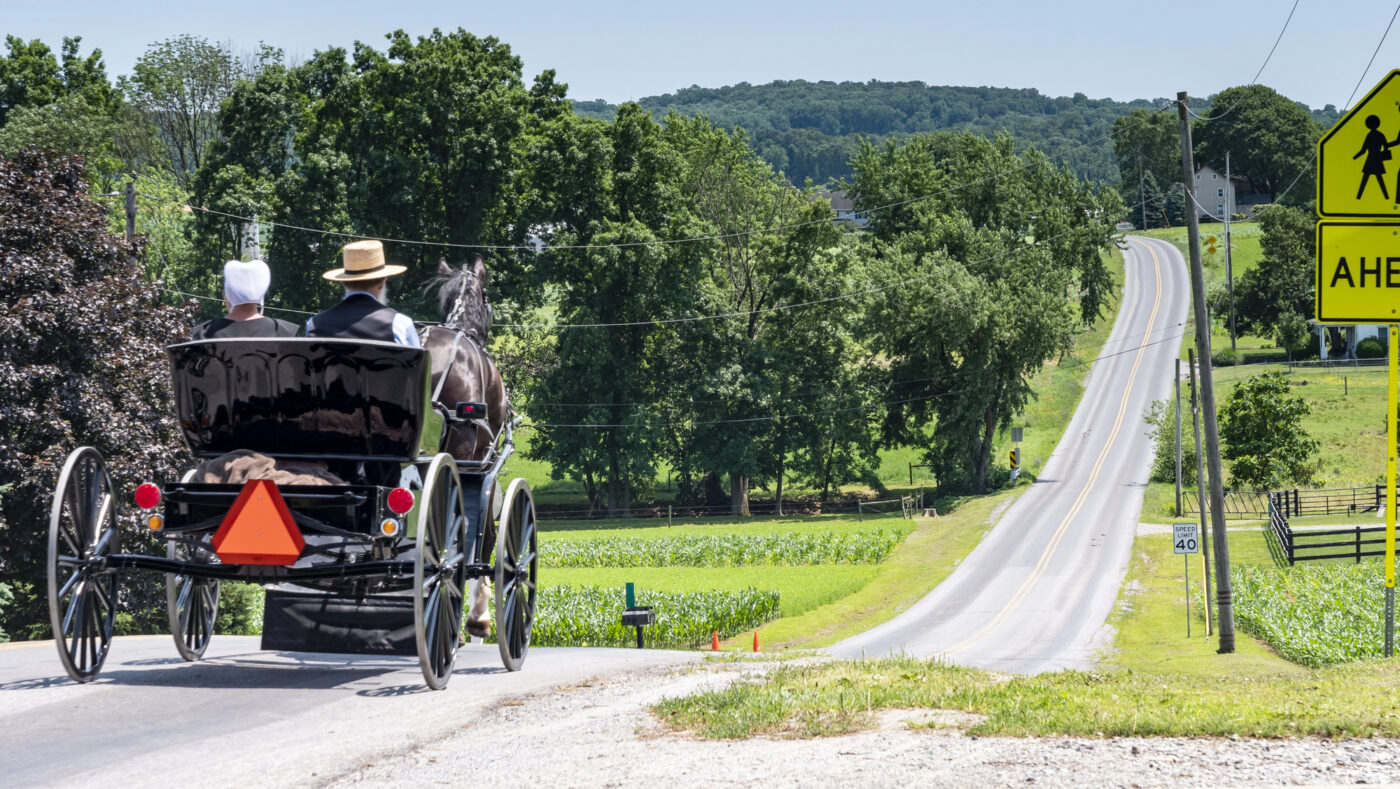
I’ve watched documentaries about the Amish, but observing the community in person is something entirely different.
Television can show you the outward details such as horse-drawn buggies, simple clothing, and rural landscapes, but it cannot give you the feeling of being there.
When we arrived at the bride’s family home, the reception had not yet begun. The wedding ceremony and morning traditions were still taking place elsewhere.
As we drove up the long driveway, we noticed people watching us. Men, women, and children all turned their attention toward our car.
We understood immediately why.
We were visitors, and also the only Black guests in attendance.
So naturally, there was curiosity.
The children, especially, watched openly. Some looked at our shoes and jewelry, clearly observing details that felt unfamiliar to them.
But what stood out most was not the curiosity itself. It was the tone of it.
There was no hostility. No discomfort. Just openness.
And we were just as curious.
And when our eyes met, there were smiles on both sides.
A Warm Welcome
The property was large, with a few canopies set up in the yard. More guests continued arriving throughout the early afternoon, most on foot, while a few non-Amish families, often called “the English,” arrived by car.
Before long, there were about 300 people gathered, maybe more.
One of the bride’s aunts greeted us warmly and introduced us to family members. Later, we met the bride’s parents and sisters.
Everyone made us feel welcome with ease. We were encouraged to walk around, explore the garden, and sit wherever we felt comfortable.
As we moved through the space, I noticed something beautiful: the natural order of the community.
Older people sat with older people. Younger people gathered together. Men milled around with men and boys. Women and girls gathered together. Children stayed close but freely moved around.
There was structure, but no tension.
Order, but also ease.
The Wedding Reception Begins
Shortly after noon, the bride and groom arrived with family members and guests.
Men walked together. Women walked together. Everything moved with quiet coordination and familiarity.
Inside the reception hall, long wooden tables and benches filled the space. The bride, groom, and wedding party sat at the head table, while guests filled the room.
There were no elaborate decorations. No formal staging. No phones held in the air.
And surprisingly, none of us missed them.
Even my niece, who is usually on her phone, was fully present.
A Family-Style Meal
We were seated along long wooden benches across from members of the Amish community.
The meal was served family-style. Dishes were passed down the table, each person taking what they wanted before passing it along.
There was something unhurried and grounding about the whole experience.
The food itself was simple: mashed potatoes, gravy, chicken, peas, bread dressing, and salad. But everything was delicious.
The mashed potatoes were smooth and creamy. The gravy was light and flavorful. The peas were the sweetest I have tasted in a long time.
Even my niece, who doesn’t usually eat peas, was surprised.
The dressing reminded me of home, though with its own distinct richness.
And just when we thought the meal was finished, more arrived – fruit, vanilla custard with graham crackers, and finally cheesecake.
Of course, I couldn’t resist.
The Moment Everything Went Still
One moment stayed with me deeply.
Before the meal, one of the elders began a prayer.
And instantly, the entire space became completely silent.
Hundreds of people. Dozens of children.
Not a sound.
You could have heard a pin drop.
I remember thinking: this is something real.
There was no instruction needed. No reminder. Silence simply happened.
What Stayed With Me
What I remember most is not just the wedding, but the sense of community.
The way people showed up for one another.
The way life felt connected rather than fragmented.
The way children grew up within that sense of belonging.
Some people look at the Amish way of life and wonder why anyone would choose it – without modern conveniences, without constant technology, without noise and distraction.
It is not about absence.
It is about presence.
Standing there, I couldn’t help thinking about some of the villages I’ve spent time in throughout Ghana and Nigeria. Different cultures and different traditions, certainly, but the same appreciation for community, hospitality, and people knowing one another. Those experiences have shaped much of what I share in my article about moving to Ghana after 50.
Different cultures. Different traditions. But shared human values.
Final Reflection
I left with wonderful memories of a wedding.
But I also left thinking about something much bigger.
Community.
Simplicity.
Hospitality.
The joy of gathering without distraction.
The comfort of belonging.
I am not suggesting we all live the same way. But I do wonder what we might learn from slowing down enough to truly see one another again.
Sometimes the deepest journeys do not require a passport.
Sometimes they simply require an open invitation and an open heart.
I am deeply grateful to the bride, her family, and the Amish community for welcoming us into their celebration.
If you enjoy reflections and articles like this, you’re welcome to join me.
I share thoughtful notes on writing, travel, and living fully – by email and at a pace that allows us to breathe.
The Cost of Living in Ghana: What Women Over 50 Should Know

This article contains affiliate links. As an Amazon Associate, I may earn a small commission from qualifying purchases at no extra cost to you. These commissions help support my work and allow me to continue creating thoughtful travel and lifestyle content. Thank you for your support.
One of the most common questions I hear from women considering a move to Ghana is:
“How much does it cost to live there?”
It’s a reasonable question, but it’s also one of the hardest to answer with a single number.
The truth is that the cost of living in Ghana depends on your lifestyle, where you choose to live, and how closely your daily habits resemble those of local residents or international expats.
If you’re still in the early stages of exploring life in Ghana, you may enjoy my article, Moving to Ghana After 50: A Complete Guide for Women, where I discuss many of the practical and cultural considerations involved in making the move.
Rather than giving you one definitive figure, I think it’s more helpful to understand the major categories of expenses you’re likely to encounter and the factors that influence them.
Typical Living Costs in Ghana (2026)
Whenever people ask me about the cost of living in Ghana, they’re usually hoping for a simple number.
Unfortunately, there isn’t one.
But these broad estimates can give you a starting point.
A Note About Costs: Prices in Ghana can change over time due to inflation, exchange rates, and local market conditions. The ranges below are intended as general estimates only. I recommend checking reputable resources such as Numbeo, Expatistan, and Global Cost of Living Data, which regularly update cost-of-living data for Ghana and cities around the world.
- Housing: Approximately $300–$2,000+ per month
- Utilities (electricity and water): Approximately $25–$150+ per month
- Internet and Mobile Service: Approximately $10–$60+ per month
- Transportation: Approximately $30–$300+ per month
- Food and Groceries: Approximately $150–$600+ per month
- Healthcare and Insurance: Varies widely depending on coverage and personal circumstances
These ranges are intentionally broad because the difference between living like a local and living like an expat can significantly affect your monthly expenses.
Now let’s look at the factors that influence those costs.
Housing: Your Biggest Expense
For most people, housing will be the largest part of their monthly budget.
One recommendation I often make is simple:
Rent before you buy.
Spending time in a neighborhood allows you to understand the area, transportation options, amenities, and daily lifestyle before making any long-term commitments.
Housing costs vary significantly depending on:
- Whether you choose an expat-oriented neighborhood or a more local area
- The size of the property
- Furnished versus unfurnished accommodations
- Proximity to shopping, healthcare, and transportation
One thing I learned fairly quickly is that two apartments that look similar on paper can produce very different living experiences.
A less expensive neighborhood may seem like a bargain until you discover you’re spending more time and money commuting everywhere.
In my experience, where you choose to live often has a greater impact on your overall budget than almost any other expense category.
Utilities: Electricity and Water
Electricity costs depend largely on usage, air conditioning, and the size of your home.
One aspect of Ghana’s utility system that I found fascinating was the prepaid electricity meter.
Coming from the United States, I was accustomed to receiving a monthly bill and paying whatever amount appeared.
In Ghana, many households purchase electricity credits as needed. When your balance gets low, you simply buy additional credit and load it onto your meter.
I actually came to appreciate this system. It gave me a clearer sense of how much electricity I was using and allowed me to manage costs more intentionally.
Water costs are generally more modest but vary depending on the property and how services are structured.
At one apartment where I lived, the water bill was divided among several tenants based on the number of people occupying each unit. Other properties may include water in the rent or handle billing differently.
Transportation: Many Options, Many Price Points
Transportation costs can vary dramatically depending on how you choose to get around.
Most Ghanaians rely on tro tros, the shared minibuses that transport thousands of people around cities and towns every day.
I have ridden them a few times myself and was glad for the experience. But if I’m being honest, they never became my preferred mode of transportation.
At this stage of my life, I value convenience and comfort, so I found myself using Bolt (something like Uber), taxis, or private drivers more often.
One reason I liked using Bolt was that I could see the estimated fare before beginning a trip. It removed some of the guesswork and made budgeting easier.
Hiring a private driver offers the greatest convenience but is usually the most expensive option.
As with many aspects of life in Ghana, your transportation budget will depend largely on your personal preferences and lifestyle.
Food: Perhaps the Most Flexible Part of Your Budget
Food expenses can range from very affordable to surprisingly expensive.
Much depends on where and how you choose to eat.
One thing that consistently surprised me was how quickly grocery costs could climb when I filled my cart with imported foods.
I’d leave the store wondering:
“How did I spend that much?”
Many larger supermarkets carry imported products from Europe and North America, North Africa, South Africa and more, and those items often come with significantly higher price tags.
Local markets, on the other hand, frequently offer fresh fruits, vegetables, grains, and other ingredients at much more affordable prices.
I learned that shopping more like a local not only helped my budget but also introduced me to foods and flavors I might otherwise have overlooked. I got used to shopping in markets.
The same principle applies to eating out.
Local restaurants often serve generous portions of delicious Ghanaian meals at reasonable prices, while international restaurants and upscale establishments typically cost a lot more.
I tend to gravitate toward local restaurants that have been recommended by local residents that I know. That’s often where I’ve found some of my most enjoyable meals.
Internet and Mobile Service
Internet and mobile service are essential for most of us, whether we’re working remotely, staying connected with family, or simply managing daily life.
One option I found particularly useful was carrying a personal mobile Wi-Fi device and purchasing data as needed.
I appreciated the flexibility, and the security of knowing that I could stay connected whenever I needed to be.
Like many services in Ghana, mobile plans often allow you to pay as you go rather than locking yourself into expensive long-term contracts.
For many visitors and expats, internet and mobile service are among the more predictable monthly expenses.
Healthcare and Insurance
Healthcare is another area where planning ahead is very important.
While healthcare costs in Ghana may be lower than in some Western countries, I strongly recommend researching health insurance options before making an extended stay or relocation.
The right insurance plan can provide peace of mind and help protect you from unexpected medical expenses.
Because needs vary significantly from person to person, it’s worth comparing providers and coverage options carefully before making a decision.
Other Expenses to Consider
Beyond the major categories, you may also encounter expenses related to:
- Household help
- Entertainment
- Domestic travel
- Visa and residency requirements
- Personal hobbies and activities
- Clothing and household items
These costs vary widely depending on your lifestyle and personal choices. I love traveling around Ghana, and so I happily spend a lot in this category, but it is so worth it to me.
My Final Thoughts on the Cost of Living in Ghana
So, whenever someone asks me, “How much does it cost to live in Ghana?” I usually smile because I know they’re hoping for a simple answer.
The truth is that the answer depends less on Ghana, and more on the life you want to create once you arrive.
Your housing choices, transportation preferences, eating habits, and lifestyle expectations will influence your expenses far more than any national average.
That’s why I encourage women to spend time in Ghana before making long-term decisions.
Experience the neighborhoods.
Shop in the markets.
Use the transportation systems.
Observe your own spending habits.
The more you understand your preferred lifestyle, the easier it becomes to estimate what living in Ghana may actually cost you.
If you’re researching the practical realities of life in Ghana, you may also find my book, Moving to Ghana: The Essential Things You Need to Know, helpful. The book was originally published in 2018, so some details have naturally changed over time. However, many of the cultural insights and foundational considerations remain relevant for anyone considering an extended stay or relocation.
Because when it comes to living in Ghana, understanding the numbers is important.
But understanding the lifestyle is even more important.
If you enjoy reflections and articles like this, you’re welcome to join me.
I share thoughtful notes on writing, travel, and living fully – by email and at a pace that allows us to breathe.
Moving to Ghana After 50: A Complete Guide for Women
This article contains affiliate links. As an Amazon Associate, I may earn a small commission from qualifying purchases at no extra cost to you. These commissions help support my work and allow me to continue creating thoughtful travel and lifestyle content. Thank you for your support.
Introduction: When Life Starts Asking Different Questions
If you’re anything like me, there comes a moment in midlife when the questions begin to change.
Not loudly. Not all at once. But steadily.
What do I want my life to feel like now?
Where do I feel most alive, most open, most myself?
And what would it look like to try something completely different?
For many women over 50, myself included, these questions eventually lead to exploring life abroad and increasingly, Ghana has become a part of that conversation.
Not because it is perfect.
Not because it is simple.
But because it offers something many women are searching for at this stage of life: possibility.
This guide brings together practical insight, cultural context, and lived experience to help you understand what moving to Ghana after 50 actually looks like, whether you are simply curious, planning extended travel, or considering relocation.
Why Ghana Is Attracting Women Over 50
Ghana has become a growing destination for women in midlife and retirement who are rethinking how and where they want to live.
Some are seeking slower living.
Some are seeking cultural connection.
Some are exploring identity shifts after retirement, divorce, or major life transitions.
Cities like Accra offer modern infrastructure, coastal living, and a growing international community. Meanwhile, places like Cape Coast provide a quieter pace rooted in history, reflection, and coastal life.
What draws many women is not just the location itself, but the feeling that life can be lived differently here.
More connected. More intentional. Less rushed.
What Life in Ghana Is Really Like (Beyond the Headlines)
What I have found is that life in Ghana is not defined only by cost of living or relocation logistics. It is also shaped by rhythm, relationships, and cultural expectations.
Daily life often moves at a different pace than many Western environments. Believe me when I say that things take longer to get done. Plans may often have to shift. Conversations matter deeply.
I’ve spent a significant amount of time living in Ghana, and I know that one of the biggest adjustments people have is learning that relationships often take priority over schedules. What initially feels inefficient eventually begins to feel more human.
At first, this adjustment can feel unfamiliar. And you may feel a little resistant.
But with time, many people begin to experience something else. A slowing down that allows for more presence and connection.
This, I would say, is one of the biggest shifts women notice when they spend extended time in Ghana: life becomes less about rushing and more about relating.
Where You Might Live in Ghana
Most women exploring Ghana for extended stays or relocation tend to focus on a few key areas:
- Urban areas like Accra for convenience, healthcare access, and modern amenities
- Coastal regions like Cape Coast for history, calmness, and slower living
- Smaller communities depending on lifestyle preferences and comfort level
There is no “best” place universally. The best place is the one that aligns with your lifestyle, comfort, and expectations.
This is why visiting first is essential.
The Importance of a Trial Visit Before Deciding Anything
One of the best steps you can take is to visit Ghana before making any long-term decisions.
Not as a tourist trying to see everything.
But as an observer of daily life.
During your visit, here are some things to pay attention to:
- How you feel navigating daily routines
- Your comfort with pace and communication style
- Your emotional response to unfamiliar systems
- Your energy levels in different environments
These experiences will tell you more than any article or checklist ever could.
Practical Considerations: What You Should Know
Moving or staying in Ghana for an extended period requires preparation.
Some practical areas to consider include:
Cost of Living
Costs vary significantly depending on location and lifestyle choices. Urban living tends to differ from smaller towns or coastal regions. Accra is expensive.
Healthcare
Healthcare services exist and continue to develop, but planning and research are essential before long stays. I’ve used them, and I was just fine. But that was me. Everybody’s situation is different.
Transportation
Transportation systems are available and varied, but they may require flexibility and adjustment compared to highly structured transit systems. I’ve used all types.
These are not barriers, but they are realities that should be understood in advance so expectations remain grounded.
Cultural Adjustment: The Part No One Can Fully Prepare You For
Perhaps the most significant transition is cultural rather than logistical.
In Ghana, greetings, relationships, and social interaction carry deep meaning. How you engage with people shapes your experience in profound ways.
For women coming from fast-paced, highly independent environments, this can initially feel unfamiliar.
But many also find that Ghana is a refreshing reminder that life is not just a series of transactions. It is about getting to know people, cultures, and building relationships.
This shift is often one of the most transformative aspects of spending time in Ghana.
The Emotional Side of Moving Abroad After 50
Relocating or spending extended time abroad later in life is not just a practical decision. It is an emotional journey.
You are stepping away from familiarity, established identity, and known systems.
At the same time, you are stepping into possibility, uncertainty, and reinvention.
Both experiences can exist at once:
- excitement and discomfort
- freedom and uncertainty
- curiosity and fear
None of these feelings are wrong. They are part of adjustment.
Why Starting With Travel Matters
Before making long-term decisions, extended travel allows you to experience Ghana in a grounded way.
It gives you space to observe:
- daily life
- cultural rhythm
- your own emotional responses
- your level of adaptability
This stage is not about commitment, it is about clarity.
Final Thoughts: Is Ghana Right for You?
Ghana is not a universal solution, nor is it a lifestyle guarantee.
But for some women in midlife, it becomes a place where life feels different enough to reconsider what is possible.
Not necessarily forever.
Not necessarily immediately.
But meaningfully.
The most important step is not rushing the decision. It’s about allowing yourself to experience, observe, and reflect.
Because clarity often comes from experience, not imagination.
About This Perspective
Much of this guidance is based on my own experience and research that I expanded on in my book: Moving to Ghana: The Essential Things You Need to Know.
Although Ghana has changed since I first published Moving to Ghana: The Essential Things You Need to Know in 2018, many readers still find it a useful introduction to the practical and cultural considerations involved in relocating. This blog series expands on those topics with updated insights and observations.
If you enjoy reflections and articles like this, you’re welcome to join me.
I share thoughtful notes on writing, travel, and living fully – by email and at a pace that allows us to breathe.
Healthy Feet Matter More Than We Think — Especially When We Travel
This article contains affiliate links. As an Amazon Associate, I may earn a small commission from qualifying purchases at no extra cost to you. These commissions help support my work and allow me to continue creating thoughtful travel and lifestyle content. Thank you for your support.
There was a time when I never thought very much about my feet.
As long as they got me where I wanted to go, I simply kept moving.
But as I began traveling more frequently and taking longer international trips, I started realizing just how important healthy feet really are.
Healthy feet help us remain independent. They help us stay active, stable, and confident while moving through airports, walking unfamiliar streets, exploring markets, climbing stairs, navigating uneven roads, and simply enjoying the experience of travel itself.
And when my feet hurt, swell, blister, or become tired, it can affect the entire travel experience.
These days, I pay much more attention to foot health, especially when I travel.
Not in an obsessive way, but in a practical way.
If you’re anything like me, you want to continue traveling comfortably for many years to come, and taking care of our feet is part of taking care of ourselves.
Why Feet Swell During Travel
Many travelers notice that their feet and ankles often swell during long flights or road trips.
This can happen after sitting for long periods of time, especially on long-haul international flights, or long road trips. Limited movement, changes in circulation, heat, dehydration, and simply sitting too long can all contribute to swollen, tired feet.
I especially notice it during long flights if I do not move around enough.
I have learned that a little prevention and preparation can make all the difference.
How I Keep My Feet Healthy While Traveling
I Moisturize My Feet Regularly
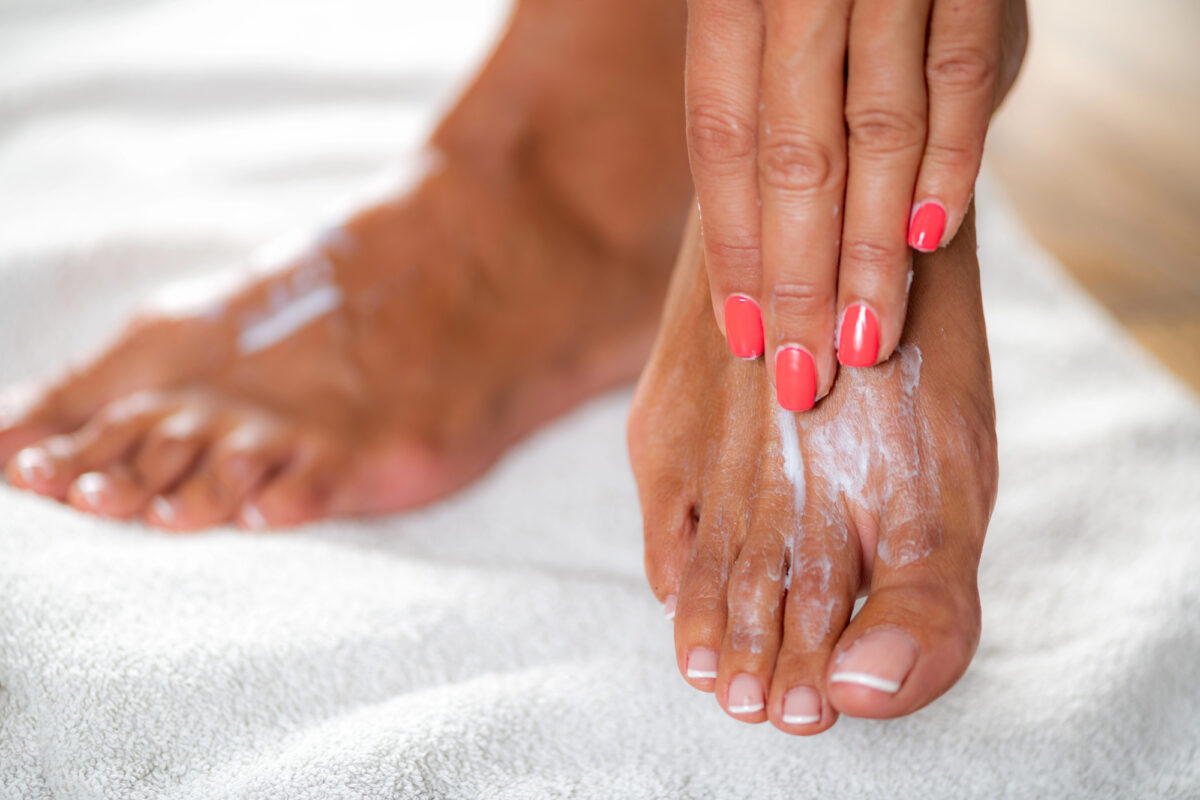
One thing I do consistently is moisturize my feet, especially my heels. I also pay attention to the area at the back of my feet, around the ankle area where blisters can form. Shea butter remains one of my favorite natural moisturizers, especially during travel. I wrote why that is in my article, Shea Butter Benefits -My Go-To Natural Skincare.
Dry, cracked heels can become uncomfortable very quickly when walking long distances during travel.
At night, I massage my feet using shea butter or a rich moisturizer, paying special attention to my heels and the soles of my feet, and around my ankles. I also massage my lower legs sometimes, especially after a long day of walking or after a long flight.
For me, this small routine feels relaxing and comforting, but it also helps to keep my feet feeling soft and healthy.
Compression Socks Are a Must for Long Flights
One travel item I rarely skip now is compression socks.
They have truly made a difference for me during long international flights.
Compression socks help support circulation and can help reduce swelling and heaviness in the legs and feet. I also simply find them comfortable. I discussed this and more in my article about staying comfortable on long-haul trips.
Whenever I fly long distances, I wear them.
And honestly, once I started using them regularly, I wondered why I had waited so long.
(As always, what works for me may not work for everyone. If you have circulation concerns, diabetes, foot pain, or other medical conditions, it is always wise to speak with your healthcare provider.)
I Choose Comfortable Walking Shoes
Comfortable shoes matter far more to me now than fashionable shoes.
When I travel, I walk a lot. Airports alone can involve miles of walking before a trip is even halfway started.
I have prefer wearing Skechers walking shoes and sneakers because I find them lightweight and very comfortable. I also like shoes with enough room in the toe area and good cushioning and support.
Everyone’s feet are different, of course. Some people may need wider shoes or added insoles for additional support.
What matters most to me, and probably to you too, is finding shoes that allow you to walk comfortably for long periods without pain.
I Wear Proper Socks
This may sound small, but socks matter.
I tend to prefer breathable crew socks rather than very low ankle socks. I simply find them more comfortable. The very low socks sometimes slide down inside my shoes, which I find very irritating while walking.
I like socks that fit well, feel soft against my feet, and provide a little cushioning without feeling too tight around my ankles or calves.
I Protect My Feet While Walking
Depending on where I am traveling, I often prefer to keep my toes and heels fully covered while walking.
If I am navigating through markets, walking uneven roads, going on tours, exploring busy cities, or doing light hiking, I usually wear supportive sneakers or walking shoes.
Covered feet help protect against accidental bumps, uneven ground, dirt, and discomfort.
If I wear sandals outdoors, I prefer sturdy sandals with secure straps and stable soles. I personally tend to prefer buckle straps because Velcro can sometimes lose its grip over time.
I Take Shower Safety Seriously
Another thing I never overlook while traveling is shower footwear.
In hotels, guesthouses, hostels, gyms, or shared spaces, wet floors can become slippery very quickly.
I usually wear sturdy shower slippers or flip-flops with good traction on the bottom. Besides helping to reduce slipping, they can also provide an extra layer of protection in shared shower areas.
Beach Shoes Can Be Helpful Too
Many people think of beaches as soft and harmless, but beaches can sometimes contain sharp shells, hidden debris, broken glass, hot sand, or rough surfaces.
When needed, I wear lightweight beach shoes or protective sandals, especially if I am walking long distances along unfamiliar beaches.
And honestly, I also pay attention to where I step.
Small Things That Help Circulation
During flights or long periods of sitting, I also try to keep my circulation moving.
Sometimes I:
- rotate my ankles
- wiggle my toes
- flex my feet up and down
- elevate my feet when possible
- gently massage my feet and legs
These small habits may seem simple, but they help me feel much more comfortable during and after travel.
Healthy Feet Support Independent Travel
As we get older, healthy feet become even more important.
Good balance, stability, circulation, and mobility all contribute to our ability to continue traveling confidently and independently.
For me, taking care of my feet is not about vanity.
It is about comfort, mobility, wellness, and preserving the freedom to continue exploring the world.
And honestly, after long flights, crowded airports, busy markets, and miles of walking, my feet deserve a little kindness too.
A Few Travel Foot-Care Items I Personally Like
Some of the travel foot-care items I personally use or appreciate include:
- compression socks
- supportive walking shoes
- cushioned crew socks
- shea butter or rich foot moisturizers
- heel buffers or foot files
- sturdy shower slippers
- beach shoes or supportive sandals
- nail clippers for basic foot care
- supportive insoles
As I have grown older, I have come to appreciate this old body of mine, from head to toe.
I like to travel and independence and mobility is a big part of that.
Sometimes it’s as simple as comfortable well-cared feet.
And at this stage of life, I’m all for making travel easier on myself (including my feet), whenever I can. When my feet are happy, travel is happier too!
The Night Ghana Began to Feel Like Home

The first time I arrived in Ghana, it was raining.
Not a gentle drizzle, but a full tropical downpour. The kind of rain that falls with confidence, as if it has somewhere important to be.
I remember stepping outside into the warm night air, hearing the rain and feeling that familiar mix of curiosity and uncertainty that comes with arriving somewhere new.
The air was warm in a way that felt different from what I was used to back in the States. There was humidity, yes, but also a breeze that moved through the night air, soft and steady.
And then there were the people.
Waiting for me in the covered arrival area just outside the airport exit doors were my hosts, the people who would later become my Ghana family.
At that moment, I didn’t know how important they would become in my life. I didn’t yet know how deeply Ghana would settle into my heart.
All I knew was that I had arrived in the middle of a tropical downpour… and somehow, it felt right.
A Leap of Trust
Before I even set foot in Ghana, I had already made a small leap of trust. Instead of booking a hotel, I accepted an invitation to stay with a family I barely knew.
I accepted the invitation partly because, from our brief interactions by phone and text, I had already warmed to Celestine. I trusted her. My mother also thought it was a good idea, and I had briefly met Celestine’s sister when she visited the United States. She was warm and easy to talk to, and that gave me additional reassurance.
I was initially hesitant, but the combination of my mother’s encouragement, Celestine and her family’s generosity, and their confident humility eventually overrode my cautious nature.
As an African, I understood what it meant when hospitality was offered. I knew how much it meant to everyone involved, and why both offering and accepting hospitality was considered an honor. Declining would not necessarily be seen as an insult, but it could feel like a quiet rejection.
I did not want Celestine and her family to think that I was too “good” or too “special” to accept their kind offer. In truth, it was already a leap of trust on their part to invite me into their home.
At the time, I did not know that this decision would lead to something far greater than a simple visit. I did not yet know that Celestine and her family would one day become my cherished Ghana family.
Back in West Africa
Even before I stepped outside, I felt a sense of familiarity settling over me.
I heard English spoken all around me, but not the tones and inflections I had grown used to in the United States. These were African voices, and English spoken with accents from different countries across the continent. We may all speak English, but we do not sound the same, and hearing those familiar rhythms brought comfort I did not expect.
The airport was crowded, as many flights were arriving from different parts of the world. Accra is the point of arrival for most visitors and a major tourist and business hub in West Africa. People stood in long lines at immigration, gathered around luggage carousels, and moved steadily through customs.
I saw people of many races and nationalities. Children clinging to tired parents, solo travelers watching their belongings carefully, and families stacking luggage onto carts with smiles of relief.
Everyone seemed happy, even if they were a little tired. There was excitement in the air and the quiet joy of arrival after a long journey.
What made the experience even more memorable was the warmth and hospitality of the airport staff. They were welcoming, pleasant, and efficient as they guided travelers through the arrival process with calm confidence.
And then there was the sign.
Akwaaba. Welcome.
Seeing that word felt like more than a greeting. It felt like recognition. It felt real.
But it was not until I stepped outside that the strongest memory took hold: the smell of West Africa.
There is a scent to tropical West Africa that is impossible to mistake. It is warm and smoky, fragrant with tropical vegetation and flowers, layered with the moisture of humidity and rain. It smells alive. It smells familiar. It smells like memory.
That night, as the humid air wrapped around me, I knew I was back, not just in Africa, but in West Africa, where the sounds, smells, and rhythms stirred something deep and familiar within me.
It sounded like home.
It smelled like home.
Into the Rain
When I stepped outside into the arrival area, I paused for a moment to take it all in.
People who had come to meet arriving passengers stood off to the sides in designated areas. The outdoor space immediately outside the airport doors was kept clear for passengers moving through with their luggage carts. Otherwise, the place would have been completely choked with people.
The waiting areas on both sides were crowded with families, friends, and drivers, all scanning the arriving passengers for familiar faces.
I began searching the crowd.
I had photographs of Celestine, but even with those, it was not easy to spot someone among so many people. The area was alive with movement – people waving, calling out names, greeting loved ones with laughter and excitement.
And then, off to the right, I saw them.
Celestine and her husband, Victor, were standing among the crowd, watching the arriving passengers carefully. She also had a photograph of me, so we were both searching for each other at the same time.
The moment I saw them, I felt immediate relief.
I cannot remember the exact words we exchanged when we first met, but knowing Celestine, it was likely something simple and warm like, “Welcome.”
Victor stepped forward and took my luggage, and together we began making our way toward the car park. That simple gesture alone made me feel cared for and reassured.
At that moment, I felt something shift inside me.
I had arrived.
I had been met.
And I knew that all would be well.
As I followed them toward the car, I felt a growing sense of anticipation. I was no longer anxious. Instead, I found myself looking forward to all that would follow.
Through Rain and Motion
The parking lot was packed, alive with movement and noise. Cars wove in and out of narrow traffic lanes, their headlights cutting through the darkness and rain. We dodged vehicles as we made our way toward the car, moving quickly but cautiously.
Horns blared all around us, a familiar sound that signaled I was truly back in West Africa. Here, the sounding of horns is not always an expression of impatience. Sometimes it is simply communication with drivers announcing their presence, signaling movement, and navigating crowded spaces with confidence.
People were everywhere talking, calling out greetings, and helping one another pile luggage into already crowded cars. Some struggled to fit bags and passengers into small spaces, while others moved with ease, loading vehicles and preparing to head home.
To one side, I noticed vans lined up neatly, their side panels emblazoned with hotel names and brands. Drivers stood nearby, waiting for their passengers.
And through it all, the rain fell steadily.
I loved it.
I have always loved the rainy season. In fact, it is one of the things I miss most about West Africa when I am away. Many people don’t enjoy being caught in the rain, but for me, rainy days have always felt like home.
That night, I felt as though I had returned not only to West Africa, but to a season I cherished.
Still, as much as I wanted to linger and enjoy the moment, we hurried toward the car, moving quickly through the rain.
The Drive Through the Rain
Once we reached the car, Victor placed my luggage inside, and I settled into the back seat, grateful to finally be out of the rain, though I must admit, I was enjoying every moment of it.
As we pulled away from the airport, the sound of the rain drummed steadily against the roof of the car, confident and reassuring. I remember telling them how much I loved the rainy season, something that often surprised people. Many travelers complain about rain, but for me, rainy days have always been a favorite.
They laughed and told me that the rains had been especially heavy in the weeks leading up to my arrival. I listened, feeling strangely at ease despite the unfamiliar surroundings.
As we drove, they mentioned that we would make a quick stop at a store before heading home.
I observed everything as we left the airport area. From the tree-lined roundabout near the airport entrance and the quiet residential surroundings nearby, we merged onto a smooth, well-maintained highway. I remember being impressed by the condition of the road. It was not what many people unfamiliar with West Africa might expect.
Streetlights lined the highway, illuminating the rain-slicked roads. Even though it was night, the streets were busy. Vendors stood along the roadside, their silhouettes visible in the glow of passing headlights. I could not clearly see what they were selling because it was too dark, but their presence alone added to the sense of life and movement around us.
As we continued driving, I noticed a mix of buildings. There were lighted business buildings standing alongside small container shops. I found myself completely absorbed in the sights and sounds unfolding outside the window.
And all the while, the rain continued steadily.
A Surprise Stop at the Store
When we arrived at the parking lot of Melcom Department Store, I noticed immediately how brightly lit the area was. The lights revealed rows of parked cars, though for a store that large, there did not seem to be as many parking spaces as I would have expected.
A security guard, or perhaps a parking attendant, was directing vehicles, helping some drivers squeeze into tight spaces and guiding others as they carefully pulled out. There was a steady rhythm to the movement, as cars inched forward and reversed with patience and skill.
We parked and made our way toward the entrance.
Steep steps led up to the brightly illuminated store, and I recall noticing a ramp on the left side of the building. The structure itself rose several floors high, about four levels, if memory serves, and the lighting inside was striking. The cool, bright fluorescent glow spilled outward, making the building feel modern and inviting.
When we stepped inside, the air-conditioning hit me immediately. It was surprisingly cold and a welcome contrast to the warm, humid night outside. That sudden blast of cool air was my first real surprise.
To the right, I noticed fresh fruits and vegetables neatly displayed, along with rows of familiar supermarket items. The layout reminded me of stores in the United States. Several checkout counters stood open, each staffed with a cashier, and customers moved steadily through the lines.
Although the store had multiple floors with additional departments, we did not go upstairs that evening. Even without exploring the upper levels, I was already impressed.
What struck me most was how much of what I saw felt familiar. The store carried many of the same types of products I had packed in my luggage, things like shampoos, conditioners, lotions, and creams. I remember thinking that I could easily have purchased many of those items right there in Ghana instead of packing them from home.
At the same time, I noticed something even more interesting. Local and African brands of food and household products displayed alongside international ones. That discovery fascinated me. It felt like a glimpse into everyday life in Ghana.
Standing there, taking it all in, I realized that I was already beginning to fall in love with Ghana and its people.
The Ride Home
When we left Melcom, the streets were still crowded despite the steady rain.
There is a particular energy about traffic in West African cities. The roads are often teeming with life, with drivers, pedestrians, and vendors weaving in and out of moving vehicles. To someone unfamiliar, it can appear chaotic, even overwhelming. But to me, it felt familiar.
I was used to traffic like this. It’s what we often call “go-slows” in Nigeria, those long stretches of slow-moving vehicles accompanied by the constant sound of blaring horns. It is a rhythm of movement that takes patience and awareness, but it is also part of everyday life.
Watching the activity around me that night reminded me of home.
Nigeria is also my home, in addition to the United States. Seeing the movement of traffic, hearing the horns, and observing pedestrians and vendors navigating the busy streets stirred memories of places I had known before. Instead of feeling overwhelmed, I felt reassured.
The city pulsed with life all around me. Lights shimmered against the shiny, rain-soaked roads, and headlights reflected off the wet roads in long streaks of red and white. People moved with purpose, even in the rain, continuing their evening routines without hesitation.
Though I felt happy and excited by everything I was seeing, fatigue was beginning to set in. The long journey, the excitement of arrival, and the sensory overload of the evening were slowly catching up with me.
As we continued driving through the crowded streets, I found myself looking forward to reaching the house and finally getting some rest.
At the Gate
Luckily, the store was not too far from the house. Within about fifteen or twenty minutes, we were pulling up to a manned security gate that led into the residential estate where the house was located.
As the car turned left into the estate, I looked out, taking in my surroundings. The area was calm and a welcome contrast to the busy roads we had just left behind. Many of the homes sat within walled compounds, their yards hidden behind gates, typical of residential neighborhoods in many parts of West Africa.
The street was wide, with occasional streetlights casting soft pools of light along the road. The rain had slowed.
Soon we pulled up to another gate.
Victor sounded the horn, and within moments, the gate opened. I believe it was Celestine’s nephew who greeted us as he opened the gate.
As we drove into the compound, the lights revealed a lovely, older colonial-style home with an inviting covered porch in front. The warm glow from the house felt welcoming, almost comforting, after the long journey.
The children were still awake.
Three boys and one girl stood nearby—shy, curious, and quiet. They greeted me politely, watching me with cautious interest. I suspect they had been warned not to bother “Auntie Mary” too much, something that would have been very much in keeping with Celestine’s thoughtful nature.
By then, my eyes were burning with fatigue. I had traveled wearing my contact lenses, something I still did at the time. These days, I wear my glasses during flights and switch to contacts after I reach my destination.
Exhaustion was catching up with me quickly.
I was more than ready to hit the sack.
A Room Prepared with Care
Celestine must have known how tired I would have been.
“Welcome to our home,” Victor said warmly, and I responded with a heartfelt thank you. Yes, I thought, thank you for the welcome, for meeting me at the airport, and for making me feel cared for from the very beginning.
Before long, I was shown down a hallway lined with bedrooms on one side. A single bathroom sat along the hall as well. My room was located near the end, close to the children’s room.
The room prepared for me belonged to one of the children. They had thoughtfully re-arranged things so that I would feel comfortable during my stay.
One detail especially touched me.
Celestine had placed a small refrigerator in the room, the kind often used by college students. Inside were bottles of water and a few soft drinks. Seeing that small gesture made me feel deeply relieved and cared for.
They showed me where the bathroom was and made sure I knew how everything worked. By then, exhaustion had fully taken hold.
Did I unpack? No, I did not.
I barely had enough energy to unzip my suitcase and retrieve my toothbrush, toothpaste, and nightgown. Celestine handed me a bottle of water to use for brushing my teeth – yet another thoughtful touch that made settling in easier.
I bid everyone goodnight and finally made my way to bed.
Oh, how grateful I was for that comfortable mattress and the quiet of that small room.
Once I lay down, I felt my body fully relax for the first time in more than twenty-four hours. The tension from travel, excitement, and anticipation slowly melted away.
Before I knew it, I drifted off to sleep.
Sometime during the night, I woke briefly when the rain began to fall again, this time in earnest.
And soon, I fell back into a deep sleep, lulled by the rhythm of the rain.
Morning Comes
I woke slowly to the sound of children.
At first, I was not quite sure where I was, or who was speaking. Then I realized the voices were coming from outside the window. The children were in the yard, speaking in hushed tones, as if trying not to wake me.
When I opened my eyes fully, I was surprised by how bright the room was. Sunlight streamed in, filling the small space with a golden glow.
Somewhere in the house, I could smell the aroma of something savory cooking, something rich and comforting. The unmistakable scent of a home already awake and busy.
I felt completely rested.
Then I glanced at the time and was shocked to see that it was already afternoon. I must have slept for more than twelve hours straight, my body finally recovering from the long journey and the excitement of arrival.
I stretched slowly and leaned over to look out the window.
Outside, I saw the boys, the twins, lingering nearby, watching and waiting. Curious. Patient. Hoping, perhaps, that I would wake up soon.
They saw me and I waved.
They waved back shyly, their faces lighting up with quiet curiosity and expectation.
And in that simple moment, standing at the window, greeting curious children, surrounded by the warmth of a family I was only just beginning to know, I felt a deep sense of comfort.
I had arrived.
Not just in Ghana, but in a place that was already beginning to feel like home.
And as I stood there, breathing in the savory aroma drifting through the house, I found myself looking forward to the many adventures that lay ahead.
That first night in Ghana marked the beginning of a journey I could never have predicted. What began as a visit would eventually grow into something far deeper – a connection to place, people, and belonging that continues to shape my life today.
Continue the Journey
If you’re planning a trip to Ghana or West Africa, you may also enjoy:
- What Not to Pack for Ghana: Lessons I Learned the Hard Way
- Why Foot Health Matters When You Travel (Especially in West Africa)
- 5 Simple Things I Now Always Pack for Long Haul Travel
How I Stay Comfortable on 10+ Hour Flights (Even in Economy)
Long flights are nothing new to me.
In fact, I’ve been traveling long distances for most of my life. From an early age, I was flying back and forth between continents, between the United States, Canada, Nigeria, and later Ghana. Travel has always been part of my story.
But here’s what I’ve learned over time:
Long flights feel very different as you get older.
When you’re younger, you can sit for hours without thinking much about comfort. Your body adjusts easily. You may not notice the little aches, stiffness, or dryness that can come with sitting in one place for ten hours or more.
But at this stage in my life, what I like to call my Bold Sage stage, I pay much closer attention to how my body feels.
Because these days, comfort matters more than ever.
I still travel long distances regularly, often spending ten hours or more in the air. Over the years, I’ve learned that staying comfortable on long flights isn’t about luck.
It’s about preparation.
It’s about knowing what works for your body and making thoughtful choices before you even step onto the plane.
Some of the habits I use today came from trial and error. Others came from lessons learned the hard way, like the time I forgot my compression socks and spent an entire flight worrying about my legs.
Little by little, I developed routines that help me stay comfortable, calm, and prepared for long-haul travel.
And the good news is this:
Most of these strategies are simple.
You don’t need luxury seats or expensive upgrades to stay comfortable on long flights. Even when flying economy, small adjustments can make a big difference in how you feel when you arrive at your destination.
In this article, I’m sharing the habits and comfort essentials that help me get through 10+ hour flights feeling far better than I used to.
Because a long flight isn’t just transportation.
It’s the beginning of the journey.
And how you feel when you arrive matters more than you might think.
Comfort Starts With What I Wear
Forget fashion, dress for comfort.
These days, I choose loose-fitting clothing whenever I travel. Tight clothes, especially around the waist, are simply not worth the discomfort during long hours of sitting.
I’ve always preferred loose clothing, but as I’ve gotten older, it has become even more important.
I also make sure to bring a sweater. Always.
Planes can be surprisingly cold, and I am almost convinced they turn down the temperature on purpose. Sitting in a cold cabin for ten hours is not something I’m willing to endure without preparation.
So a warm sweater is non-negotiable for me.
Shoes matter just as much.
I always wear comfortable sneakers when I travel. Not stylish shoes, not fancy shoes, just comfortable shoes.
I like my feet fully covered, especially when:
- Walking through airports
- Moving around the plane
- Rushing to catch a connecting flight
And believe me, I have rushed through an airport more than once.
And yes, I always wear socks.
These days, those socks are usually compression socks, which have become one of my most important comfort essentials.
Compression Socks Changed Everything for Me
There was one long flight I will never forget.
Not because of turbulence or delays, but because I forgot my compression socks.
That entire flight, I kept thinking to myself:
Oh my goodness… what if my legs swell? What if I develop a blood clot?
I found myself doing little foot exercises in my seat and getting up to walk around more often than usual, simply because I felt uneasy without them.
That experience stayed with me.
Now, I never travel on long flights without compression socks.
For me, they make a noticeable difference. When I wear them, my legs feel more supported and less tired.
There’s almost a gentle, comforting pressure that feels like a soft massage throughout the flight.
Put them on before leaving for the airport.
Trying to put on compression socks inside an airplane seat is not easy. There’s hardly enough room, and removing shoes mid-flight can feel awkward.
Putting them on at home makes everything simpler.
Another important tip is to make sure the socks fit properly.
Compression socks should feel:
- Snug
- Supportive
- Comfortable
- Not painfully tight
I always try mine on before traveling, just to make sure they feel right.
Sometimes I fold them slightly at the top if they feel too high on my leg.
The goal is comfort, not pressure.
All I know is that:
My legs feel far more comfortable with compression socks than without them.
And after that one flight when I forgot them, I never take that chance again.
Staying Warm and Comfortable in a Cold Cabin
If you’ve flown long-haul even once, you already know that airplane cabins can get cold. Very cold.
Not just a little chilly, but wrap-yourself-up-and-don’t-let-go cold, especially halfway through the flight when the lights are dimmed and everyone is trying to sleep.
Over time, I learned not to rely on whatever blanket the airline may, or may not, provide.
These days, I come prepared.
I always carry both a sweater and a shawl.
Yes, both.
The sweater keeps my core warm when the cabin temperature drops. But the shawl? That’s my secret weapon.
A good shawl is wonderfully versatile. I can:
- Wrap it around my shoulders
- Drape it across my lap
- Tuck it around my neck
- Roll it into a makeshift pillow
On especially cold flights, it becomes my personal cocoon – lightweight, familiar, and dependable.
There’s also something comforting about having layers that belong to me. Airline blankets are helpful when available, but there’s a different level of comfort that comes from wrapping yourself in something you chose and packed with intention.
Another change that made a surprisingly big difference in my comfort is my seat choice.
These days, I almost always choose an aisle seat instead of a window seat.
For years, I loved window seats. I enjoyed watching the clouds drift by and leaning against the side of the aircraft.
But as time went on, and as long flights became more frequent, I realized that comfort on long-haul journeys isn’t just about the view.
It’s about flexibility.
An aisle seat allows me to:
- Stand when I need to
- Stretch more easily
- Walk around without climbing over anyone
- Move freely when my body needs it
That freedom makes a real difference on flights lasting ten hours or more.
When you combine:
- Warm layers
- Smart seat choices
- The freedom to move
…the difference in overall comfort is noticeable.
And after all, comfort on a long flight isn’t just about getting through the hours.
It’s about arriving at your destination feeling as comfortable, and as ready as possible, for whatever adventure awaits.
Staying Hydrated in Dry Cabin Air
One thing many people don’t think about before a long flight is how dry the air inside the cabin can be.
Cold and dry is not the most comfortable combination.
Over the years, I noticed that when I didn’t stay properly hydrated, I would start coughing or feel dryness in my throat. And trust me, there is nothing more uncomfortable than coughing repeatedly on a long flight while people around you start giving you suspicious looks.
That alone was enough motivation for me to take hydration seriously.
These days, I always travel with a refillable insulated water bottle with a secure twist-on lid.
I fill it once I get through airport security, and if needed, I refill it again before boarding. Having my own bottle means I don’t have to rely only on the small cups of water handed out during beverage service.
I’ve also learned that what I don’t drink matters just as much as what I do drink.
Before long flights, I try to limit:
- Coffee
- Caffeinated drinks
- Carbonated beverages
- Alcohol
All of these can make dehydration worse or make me feel uncomfortable during the flight.
Water works best for me.
Sometimes I’ll have juice, but not too much because of the sugar. And occasionally tomato juice, but that tends to make me thirsty again, so water remains my first choice.
Dry cabin air doesn’t just affect your throat. It can also affect your eyes.
Since I wear contact lenses, I’ve learned to make adjustments. These days, I often travel wearing my glasses instead of contacts. The cabin air can make my eyes feel dry, and glasses are simply more comfortable during long flights.
I also carry plain eye drops to help keep my eyes moist when needed.
Another small comfort item I never forget is cough drops or hard candy.
Even when I’m drinking water, the dry air can sometimes irritate my throat. Having something to suck on helps reduce coughing and keeps my throat more comfortable.
These may seem like small details, but together they make a noticeable difference.
Because staying hydrated on a long flight isn’t just about drinking water.
It’s about protecting your comfort, from your throat to your eyes, and making the long hours in the air easier to manage.
My Personal Comfort Kit (Small Things That Make a Big Difference)
Over the years, I’ve learned that comfort on a long flight isn’t just about what you wear or where you sit.
It’s also about what you keep within reach.
These days, I always travel with a personal bag that fits neatly under the seat in front of me. That bag holds my comfort essentials – the small items that make a surprisingly big difference during a long flight.
I like knowing that everything I need is right there, within arm’s reach.
I don’t want to keep standing up and reaching into the overhead bin every time I need something simple. On a long flight, convenience matters just as much as comfort.
Inside my under-seat bag, I keep what I think of as my personal comfort kit.
Here are some of the essentials I never travel without:
- Cough drops or hard candy – Helps soothe my throat and prevent coughing fits.
- Lip balm – Dry air can be hard on your lips.
- Moisturizer or hand lotion – Helps prevent dry, tight skin.
- Eye drops – Especially helpful when the cabin air feels extra dry.
- Hand sanitizer – Gives me peace of mind when traveling through busy airports.
- A cotton handkerchief – Simple, reusable, and surprisingly useful.
- Pain medicine – I keep this handy in case my back begins to act up.
- Eyeglass cleaner – A small item, but very helpful.
- My Kindle or reading device – I never travel without something to read.
- A crossword puzzle book – Helps pass the time when I can’t sleep.
Each of these items serves a simple purpose, but together, they create a sense of comfort and control during long flights.
There was a time when I carried fewer things and hoped for the best. But experience has taught me that being prepared makes the journey smoother.
Now, before every long flight, I take a few minutes to check that my comfort kit is stocked and ready.
Because when everything I need is within reach, I can relax, settle into my seat, and focus on the journey ahead without unnecessary interruptions.
Movement Matters More Than You Think
One of the biggest lessons I’ve learned over the years is this:
Your body will tell you what it needs, if you pay attention.
These days, I don’t wait for stiffness or discomfort to build before I move. I listen to the messages my body gives me. When it tells me to get up and move, I get up and move.
Simple as that.
Long flights require a lot of sitting, and sitting still for ten hours or more is not something the human body enjoys.
That’s why movement has become one of my most important comfort habits.
I don’t follow a strict schedule, and I don’t watch the clock.
Instead, I move when my body tells me it’s time.
Sometimes that means:
- Standing beside my seat
- Stretching my legs gently
- Walking slowly up and down the aisle
- Extending my legs into the aisle when it’s safe
These small movements help keep my body from feeling stiff and tired.
They also help with circulation, which is something that becomes more important on long flights, especially as we get older.
That’s one of the reasons I now prefer aisle seats.
Like I mentioned earlier, in the past, I loved window seats. I enjoyed having that quiet corner and something to lean against.
But over time, I realized that being able to get up easily mattered more than having a view of the clouds.
An aisle seat allows me to move freely without worrying about disturbing someone else.
If my body says, It’s time to move, I can move.
That freedom makes a real difference on long flights.
Movement also works hand-in-hand with wearing compression socks. Together, gentle movement and proper leg support help my legs feel less tired by the time the flight is over.
And honestly, sometimes getting up and walking around helps your mind too.
After sitting for hours, even a short walk down the aisle can feel refreshing. It breaks up the monotony and helps pass the time.
These days, I don’t ignore discomfort.
I listen.
Because staying comfortable on a long flight isn’t about being perfectly still.
It’s about staying aware and responding when your body needs movement.
Things I No Longer Do on Long Flights
Over the years, I’ve learned that staying comfortable on long flights isn’t just about what I do.
It’s also about what I no longer do.
Some habits that once seemed harmless were actually making long flights harder than they needed to be.
Little by little, experience taught me what to keep, and what to let go.
Here are a few things I no longer do.
I No Longer Rush to the Airport
These days, I give myself plenty of time.
Rushing creates stress, and stress is the last thing I want before settling into a ten-hour flight.
When I arrive early, everything feels calmer. I can move at my own pace, find my gate without panic, and refill my water bottle before boarding.
Starting the journey calmly makes the entire flight feel easier.
I No Longer Carry a Neck Pillow
For years, I carried a neck pillow everywhere.
Eventually, I realized it had become just one more bulky item to manage.
Now, I use the pillow provided on the plane, but not for my neck.
Instead, I place it behind my lower back, where I need support the most.
Less bulk. Better support.
That works for me.
I No Longer Watch the Flight Time Constantly
There was a time when I checked the flight progress screen over and over again.
But constantly watching the clock makes the flight feel longer.
Now, I focus on reading, puzzles, or resting, and somehow, the flight seems to pass more quickly.
I No Longer Recline My Seat Too Far
Reclining too far sometimes makes my lower back feel worse. I also don’t want to disturb the person seated behind me.
These days, I sit more upright with proper support.
Comfort doesn’t always mean leaning back.
Sometimes, it means sitting just right.
I No Longer Drink Coffee on the Plane
This one is probably the hardest.
Because I truly love coffee.
I love the aroma and the comfort of a warm cup, especially with a morning meal.
But over time, I noticed that drinking coffee during long flights didn’t always agree with me.
So now, I usually skip it.
And yes, it still takes discipline.
But staying comfortable matters more than satisfying a short-lived craving.
Comfort Is No Longer a Luxury for Me
There was a time when I thought comfort on flights was optional.
Something extra.
Something to consider only if the price was right.
But over the years, and especially at this stage of my life, I’ve come to see things differently.
Comfort is no longer a luxury for me. It’s a necessity.
If I can afford to upgrade my seat for more space, I do it.
Not to be fancy, but to arrive feeling rested and comfortable.
Because I’ve learned something important:
The flight itself is part of the journey.
How you feel when you arrive matters just as much as what you plan to do once you get there.
So now, when I have the option, I choose comfort.
Not as an indulgence.
As an investment.
Because comfort supports the entire travel experience.
Comfort Makes the Journey Better
After a long flight, there is always one moment I look forward to.
That moment when the plane lands, the doors open, and the journey shifts from travel to arrival.
For me, one of the greatest joys is stepping outside the airport and seeing familiar faces waiting to greet me.
But if I had to name one simple pleasure that makes the journey feel complete, it would be this:
A nice, hot shower.
After hours of sitting in dry cabin air, bundled in layers and stretching when needed, that first hot shower feels like a reward.
It signals the end of the flight and the beginning of everything that comes next.
That’s why I take comfort seriously before I even step onto the plane.
Because a long flight is not just transportation.
It’s the beginning of the journey.
And how you feel when you arrive matters more than you might think.
Not perfection.
Not luxury.
Just thoughtful preparation that helps you arrive ready for whatever adventure awaits.
You May Also Find Helpful
Why Foot Health Matters When You Travel (Especially in West Africa)
5 Simple Things I Now Always Pack for Long-Haul Travel
What Not to Pack for Ghana: Lessons I Learned the Hard Way
This article contains affiliate links. As an Amazon Associate, I earn a small commission from qualifying purchases with no extra cost to you.
One of the most frustrating packing mistakes I ever made happened just before a trip to Ghana.
My ride to the airport was arriving in less than an hour, and I was still packing. Like many travelers, I kept adding “just one more thing,” convinced I might need it.
Finally, I zipped up my suitcase and weighed it using the luggage scale I always keep tucked in my carry-on luggage.
It weighed over 50 pounds.
Now I was in trouble.
With time running out, I had to start unpacking in a rush, pulling things out and guessing what I could manage without. One of the first items to go was an extra pair of jeans. I already had a blue pair and a black pair packed, along with lightweight linen trousers, and I was only going to Ghana for two weeks.
I made it to the airport on time, but the stress didn’t end there. I hadn’t had time to re-weigh my luggage. At the ticket counter, my suitcase was still too heavy. Right there in front of everyone, I had to open my luggage again and move a few more items into my carry-on bag, hoping I could bring the weight down to the airline limit.
It was not the way I wanted to begin a long journey. I felt rushed, flustered, and slightly embarrassed, and all this before the trip had even started.
Why We Pack Too Much
You know how sometimes you have a closet full of clothes, yet you still end up wearing the same few outfits over and over again?
Traveling can be exactly the same. We pack far more than we need, convinced we’ll wear everything we bring. But in reality, we gravitate toward our favorite pieces, while many items remain untouched at the bottom of the suitcase.
Packing for Ghana became much easier once I stopped taking things I didn’t truly need. With each trip to Ghana, I learned that packing lighter didn’t mean sacrificing comfort, instead it meant traveling smarter.
Once I stopped packing “just in case” items, my journeys became less stressful, and far more enjoyable.
Don’t Pack Too Many Clothes
One of my biggest early packing mistakes was taking too many clothes. I would stand in front of my closet thinking, Maybe I’ll need this… and this… and oh, let me add this one too. Before long, my suitcase was packed to the brim.
But the reality is, that just like at home, you’ll end up choosing the same few favorites to wear. A couple of blouses, loose-fitting trousers, and comfortable everyday outfits usually do the trick. I would much rather repeat an outfit than struggle with a heavy suitcase.
Over time, I also started using simple packing cubes to keep things organized. They help me see exactly what I’m packing and prevent me from stuffing in too many extra items.
Don’t Pack Too Many Jeans
Jeans deserve their own mention because they were one of my biggest packing mistakes. I learned that lesson the hard way, especially on the trip when I had packed a blue pair, a black pair, and still had lightweight linen trousers.
The truth is, jeans are heavy and bulky, and they don’t dry quickly. In Ghana’s tropical climate, laundry is often hung outside to dry. Lightweight trousers dry much faster, making life easier.
Now I limit myself to one or two pairs of jeans at most, leaning toward lightweight trousers that are easier to pack and kinder to my suitcase.
Skip Heavy Sweaters and Jackets
I used to pack heavy sweaters and jackets as if preparing for cold weather, just in case. But Ghana has a tropical climate, and warm weather is the norm. While evenings can sometimes be cool, but for most of the time, those heavy items stayed unused in my suitcase.
The only time I truly appreciated a sweater was on the airplane, where it can get quite cold.
I usually travel with a travel-friendly shawl or wrap which is perfect for flights and cooler evenings.
Avoid Bulky Shoes and High Heels
Shoes can quietly take over your suitcase if you’re not careful. Bulky shoes take up more space than expected, and high heels, while beautiful, aren’t always practical. Walking on uneven streets or navigating busy open-air markets calls for comfort, not fashion struggles.
Instead, I now focus on bringing shoes that are comfortable, practical, and versatile. A dependable pair of walking shoes and a simple pair of elegant flats usually serve me well.
If you’re wondering what types of shoes work best for travel like this, I shared more details in my article about the travel shoes I rely on most.
Choose the Right Fabrics
Fabric choice makes a huge difference in a tropical climate. On one trip, I packed clothing made from polyester-type material, thinking it would be fine. That was a mistake.
Heat and humidity made those fabrics feel sticky, clingy, and downright uncomfortable. Cotton outfits became my trusted favorites. They are perfect for staying cool and comfortable.
Don’t Bring Full-Size Toiletries
I used to pack full-size bottles of shampoo, lotion, toothpaste, and bar soap. Over time, I realized that most of these items added unnecessary weight to my suitcase. Many everyday products can also be purchased in Ghana.
Now, I take smaller sizes that last the trip. If I run out, I buy more there.
I also take along travel-size refillable toiletry bottles which are lightweight, leak-proof, and TSA-friendly.
Avoid Clothing That Feels Out of Place
In many parts of Ghana, people dress modestly, especially mature women. Very short shorts, low-cut tops, or overly revealing outfits aren’t commonly worn by older women.
Loose-fitting, comfortable clothing that offers good coverage works best. It feels appropriate and helps you feel relaxed and confident.
Rethink Swimwear Expectations
Many travelers imagine swimming in the ocean when visiting Ghana. But at many beaches, rough waters, strong currents, or rocky areas make swimming unsafe. Pools are the more common option.
One simple, comfortable swimsuit is usually enough, especially if you expect to spend most of your time in hotel pools.
A conservative one-piece swimsuit or simple swim dress (tankini swimsuit) works beautifully for mature travelers.
The Hidden Costs of Overpacking
Overpacking isn’t just a pain to carry – it comes with hidden costs:
- Heavy luggage is harder to lift, move, and manage.
- Exceeding airline limits can mean overweight baggage fees or stressful last-minute adjustments.
- Overpacking adds stress before your trip even begins.
Traveling lighter makes everything easier, from airport navigation to settling into your destination.
Pack Light and Travel Easy
Packing for Ghana doesn’t have to be complicated. The simpler you keep it, the easier your journey becomes.
Over the years, I’ve learned that packing less doesn’t mean sacrificing comfort. It means making thoughtful choices. A lighter suitcase makes travel smoother, less stressful, and far more enjoyable.
These days, I remind myself of that stressful airport moment whenever I start packing. It keeps me focused on what I truly need, and what I need to leave behind.