
Inside Ghana’s Centre for Plant Medicine Research
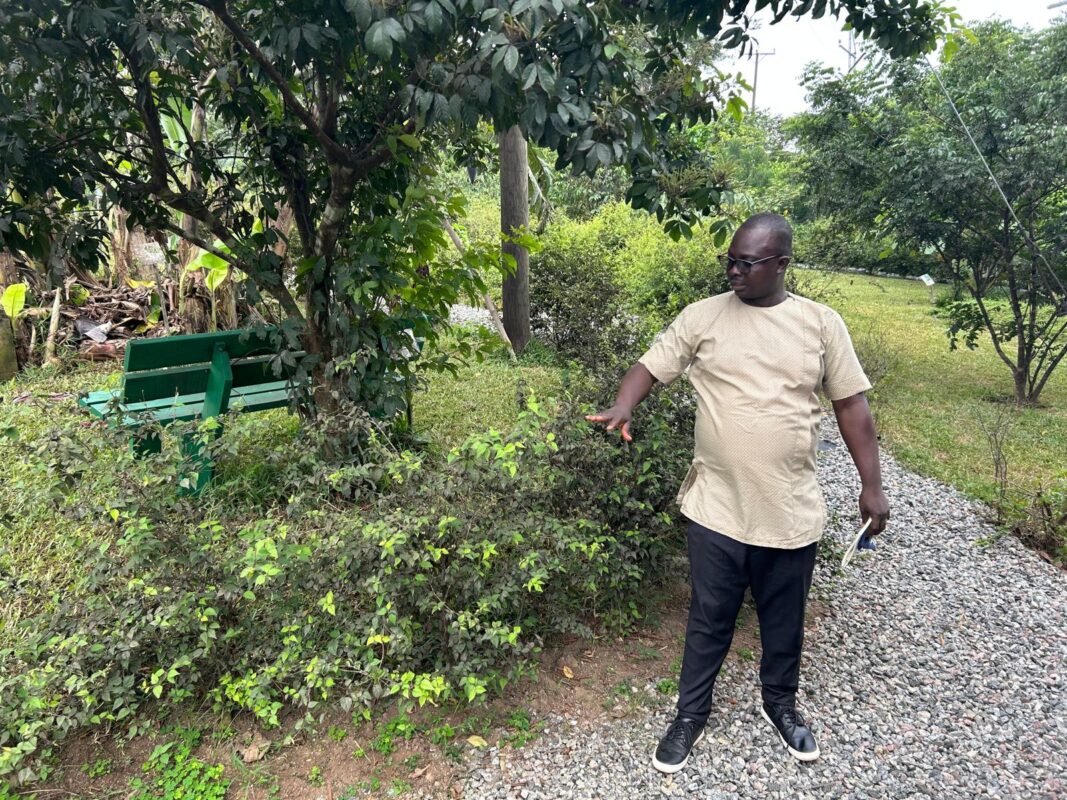
For years, I’ve been curious about plant medicine, not the vague, unregulated kind, but the scientific kind. The kind that asks real questions, such as:
- What’s actually in the plant?
- How does it work in the body?
- What’s the correct dosage?
- And most importantly – is it safe?
That curiosity led me to Ghana’s Centre for Plant Medicine Research, a national institution quietly doing rigorous, evidence-based work at the intersection of traditional knowledge and modern science.
What I discovered during my visit and interview surprised me in the best way.
This is Not Folk Medicine. It’s Research.
Let me be clear about something right from the start.
The Centre for Plant Medicine Research is not a collection of backyard remedies or spiritual healing practices. It is a scientific research institution staffed by highly trained professionals: botanists, agronomists, pharmacologists, microbiologists, chemists, and medical doctors, many with advanced degrees and dual training in both orthodox and herbal medicine.
Here, medicinal plants are treated the same way pharmaceutical drugs are treated elsewhere: They are identified, tested, standardized, and regulated.
Researchers don’t just say a plant “works.” They isolate its active chemical compounds, measure concentration, study how those compounds interact in the body, and test for safety, toxicity, and microbial contamination.
From Field to Formula
One of the most fascinating aspects of the Centre’s work is how methodical the process is.
It begins with plant identification and conservation. The Centre maintains multiple conservation sites and herbaria – living libraries of medicinal plants – ensuring that species are accurately identified and sustainably cultivated. This is especially important in Ghana and across West Africa, where overharvesting has pushed some medicinal plants toward extinction.
Once harvested, plant materials move through a carefully controlled pipeline:
- Phytochemical analysis to identify active ingredients
- Microbiological testing to ensure safety
- Dosage formulation to prevent over, or under-treatment
- Clinical observation and trials where appropriate
Only after passing through these stages can a product move forward.
FDA Approved
One of the most reassuring things I learned is that all Centre-produced medicines go through Ghana’s rigorous FDA approval process. This means they are tested, reviewed, and certified before reaching the public.
This matters, especially for people like me, who want alternatives to Western prescriptions but still value regulation, data, and safety.
Many of the Centre’s formulations address conditions that are increasingly common both in Ghana and abroad:
- Hypertension
- Diabetes and pre-diabetes
- Stress-related conditions
- Digestive issues
- Immune support
- Chronic infections
- And many other conditions that affect people in Africa and globally
The approach is often slower and more gradual than Western pharmaceuticals, but is also gentler on the body, with fewer aggressive side effects when used correctly and under medical guidance.
Doctors Trained in Both Worlds
Another detail that stood out: All of the clinicians working at the Centre are fully trained medical doctors who later specialized in herbal medicine. Others begin in herbal medicine and receive extensive biomedical training.
Patients visiting the Centre’s outpatient clinic (OPD) undergo proper consultations, vital checks, lab testing, and follow-ups, just as they would in a conventional hospital. If a condition requires orthodox treatment, patients are referred accordingly.
This is not an “either/or” model. It’s integrative medicine, grounded in evidence.
Why This Matters, Especially Now
Around the world, more people are questioning one-size-fits-all healthcare. They want options. They want transparency. They want treatments that work with the body, not just override symptoms.
The Centre for Plant Medicine Research offers something rare: A scientifically credible model for traditional medicine in a modern healthcare system.
For me personally, this visit wasn’t just educational. It was affirming. I left with a deeper respect for what’s possible when ancestral knowledge is honored and tested, rather than dismissed or blindly accepted.
Plant medicine doesn’t have to be mysterious to be powerful. Here in Ghana, it’s being studied, measured, and practiced with care.
If you’re curious to learn more about the work being done at Ghana’s Centre for Plant Medicine Research, you can visit their official website here.