
Vegan and Vegetarian Meals in West Africa

What’s the Difference Between Vegan and Vegetarian?
Before we get into the delicious plant-based food options in West Africa, let’s clarify the basics. Vegetarians avoid meat, poultry, and fish but may consume dairy and eggs. Vegans take it a step further—no animal products at all, including dairy, eggs, and honey. If it comes from an animal, it’s off the menu for vegans.
Can You Eat Vegan or Vegetarian Meals in Ghana?
Absolutely! If you’re visiting Ghana or another West African country and wondering whether you can maintain your plant-based diet, the answer is yes. West African cuisine is naturally rich in plant-based ingredients, thanks to an abundance of fresh vegetables, fruits, grains, and beans. Many traditional dishes are already vegan or vegetarian—or can easily be modified.
Key Ingredients in West African Plant-Based Meals
West African cuisine features a variety of naturally plant-based foods. Some staples include:
- Grains and Starches: Rice, millet, maize, cassava, yam, and plantains
- Legumes: Black-eyed peas, groundnuts (peanuts), and cowpeas
- Leafy Greens: Spinach, cocoyam leaves (kontomire), bitter leaf, and ewedu leaf (jute leaves)
- Fruits: Mangoes, pineapples, papayas, coconuts, avocados, and bananas
- Spices and Sauces: Palm oil, chili, ginger, garlic, shito (a spicy pepper sauce), and tomatoes
Popular Vegan and Vegetarian Dishes in Ghana and West Africa
Many traditional West African meals are either naturally plant-based or can be made so with slight modifications. Here are some must-try dishes:
- Waakye – A filling popular rice and beans dish often served with fried plantains and shito. Skip the meat to keep it vegan or vegetarian.
- Red-Red – A flavorful bean stew made with palm oil, served with fried plantains.
- Palava Sauce – A spinach or cocoyam leaf stew that can be prepared without meat or fish.
- Kelewele – Spicy, fried plantains, often cubed and seasoned with ginger and chili (pepper).
- Jollof Rice – An iconic, spicy tomato-based rice dish, which can often made without meat.
- Yam, Plantain, and Cassava Chips – Deep-fried yam, plantain or cassava.
- Tofu Dishes – Tofu is available in some places as a protein substitute.
- Moin-Moin – A Nigerian steamed bean dish that’s often vegan.
- Puff-Puff – A popular deep-fried dough snack that can be made without dairy.
Eating Vegan and Vegetarian in Ghana: What to Expect
Ghana has plenty of fresh fruits and vegetables, making it easy to eat plant-based. However, in urban areas, the rise of Western style fast food has led to more processed food options. If you’re looking for whole, plant-based meals, consider visiting local markets and traditional restaurants rather than relying on international fast-food chains.
Tips for a Vegan/Vegetarian-Friendly Trip to Ghana
- Communicate Your Dietary Needs – When dining out, ask if a dish contains meat, fish, or dairy. Many local restaurants are happy to modify meals.
- Call Ahead – Some hotels and restaurants offer plant-based meals, but it’s always a good idea to confirm in advance.
- Explore Local Markets – Fresh fruits, vegetables, and nuts are widely available.
- Bring Snacks – If you have specific vegan-friendly snacks, consider packing them, as specialty vegan products may be harder to find.
Final Thoughts
Eating vegan or vegetarian in Ghana and West Africa is not only possible but also enjoyable. From hearty local soups and stews to popular flavorful plantain dishes, you’ll find a variety of delicious and nutritious meals. So, get ready to enjoy West Africa’s plant-based delights on your next trip!
To read more about the vegan and vegetarian scene in West Africa, visit Spicy Tasty Vegan Cuisine’s YouTube Channel for cooking lessons and valuable information. The owners are currently based in The Gambia where they live and train chefs and visitors on vegan cooking and lifestyle. Enjoy!
Planning a trip to Ghana (or The Gambia)? Want to explore the best vegan and vegetarian spots? Let me help! Contact me for travel tips and customized plant-based food tours in West Africa at: mary@maryoluonye.com
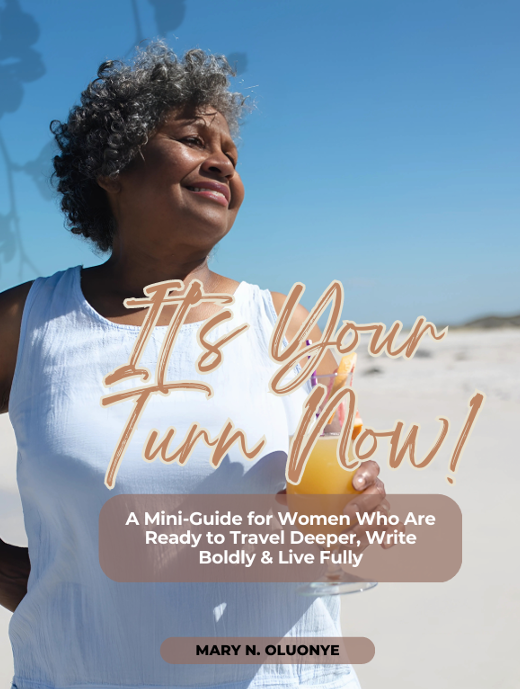
Ready to explore the world, express yourself through writing, or live your best life after 50?
Whether you’re here for the inspiration, the tips, or the free guide, you’re in the right place. When you sign up, you will receive inspiring reflections and gentle prompts that invite you to travel deeper, write boldly, and live more fully—wherever you are on your journey as a welcome gift, you’ll also get my free guide: Travel Deeper, Write Boldly, Live Fully — packed with ideas to help you travel with purpose, write what’s in your heart, and live fully in this season of life. Sign up now to stay connected, get inspired, and grab the guide (or not — it’s totally up to you).
What to Do Before You Go: A Checklist for Senior Travelers
So, you want to travel, but you’re feeling a little unsure? Don’t let age—or uncertainty—hold you back! Pack those bags and get moving. Sure, we have a few extra concerns as we age—mobility, travel companions, logistics—but none of these things should stop you from going for it! My What to Do Before You Go Checklist for Senior Travelers is going to take away a lot of your anxiety.
The key? Preparation. When you plan ahead, you travel with confidence, experience less stress, and enjoy your journey to the fullest. Let’s break it down.
Plan Ahead
Give yourself a solid 3-6 months to plan. Decide where you want to go, what you want to do, and the best time to visit. Research visa requirements, necessary vaccinations, and local customs.
Pro tip: Schedule a medical and dental checkup before your trip. Nothing ruins an adventure faster than a surprise toothache in a foreign country. Trust me—I’ve been there.
Purchase Travel Insurance
Yes, it’s an extra expense. But it’s a must. Travel insurance isn’t just for lost luggage and canceled flights; it covers medical emergencies, too. No matter how careful you are, accidents happen—I once took a tumble down a hill in Ghana. Travel insurance ensures peace of mind so you can focus on having a good time.
Pack Lightly—Especially Your Carry-On
Your laptop may feel light at home, but after a few hours of airport trekking, it feels like you’re hauling weights. Aim to fit everything—including your laptop—into a single carry-on that fits in the overhead compartment or underneath the seat in front of you.
Packing must-haves:
- Medications in original bottles with labels
- Reading glasses
- Mobile devices, earbuds, and a small travel blanket
- Snacks and a refillable water bottle
- A book or journal
Bonus tip: Avoid stuffing too much under the seat in front of you. Give your legs some room.
Stay Healthy on the Plane
- Move your legs: Flex those toes, stretch, and walk around every couple of hours to keep the blood flowing.
- Stay hydrated: Airplane air is dry. Drink plenty of water.
- Aisle seat advantage: If you’re prone to getting up often, an aisle seat is your best friend.
- Bring cough drops or mints: Dry air can lead to coughing, and no one wants to be that person on the plane.
Book Your Accommodation in Advance
You want a safe, comfortable, and accessible stay. If traveling solo, it’s smart to consult a local guide or reputable tour operator to ensure your hotel meets your needs.
Things to consider:
- Wide doorways if using a wheelchair
- Low-entry bathtubs (stepping over high ones can be tricky!)
- Safe floor level—avoid the ground floor but don’t go too high
Getting Around & Sightseeing
Navigating a new country can be tricky, especially in places like West Africa, where traffic and road conditions vary. Public transport isn’t always straightforward. A trusted guide or tour operator can take the guesswork out of it.
Benefits of a guide:
- Reliable transportation
- Insider knowledge of attractions
- A smoother, stress-free experience
Be Realistic with Your Itinerary
You have 10 days in a new country—you won’t see it all. And that’s okay. Avoid the temptation to cram every waking hour with activities.
Schedule downtime: Lounge by the pool, enjoy a quiet meal, or people-watch from a café. Give yourself moments to soak it all in.
One last thing: Try not to compare everything to “back home.” You’re here for a new experience. Embrace the differences—whether it’s the food, fashion, or customs. Step out of your comfort zone and enjoy the adventure!
Savvy Senior Traveling The secret to stress-free travel? Preparation. When you know what to expect, your journey will be smoother, safer, and more enjoyable. So, pack your bags, take a deep breath, and get ready for a fantastic adventure—wherever the road may lead.
Ready to explore the world, express yourself through writing, or live your best life after 50?
Whether you’re here for the inspiration, the tips, or the free guide, you’re in the right place. When you sign up, you will receive inspiring reflections and gentle prompts that invite you to travel deeper, write boldly, and live more fully—wherever you are on your journey as a welcome gift, you’ll also get my free guide: Travel Deeper, Write Boldly, Live Fully — packed with ideas to help you travel with purpose, write what’s in your heart, and live fully in this season of life. Sign up now to stay connected, get inspired, and grab the guide (or not — it’s totally up to you).
Single Mom’s Guide: Moving to Ghana by Karlene Thompson
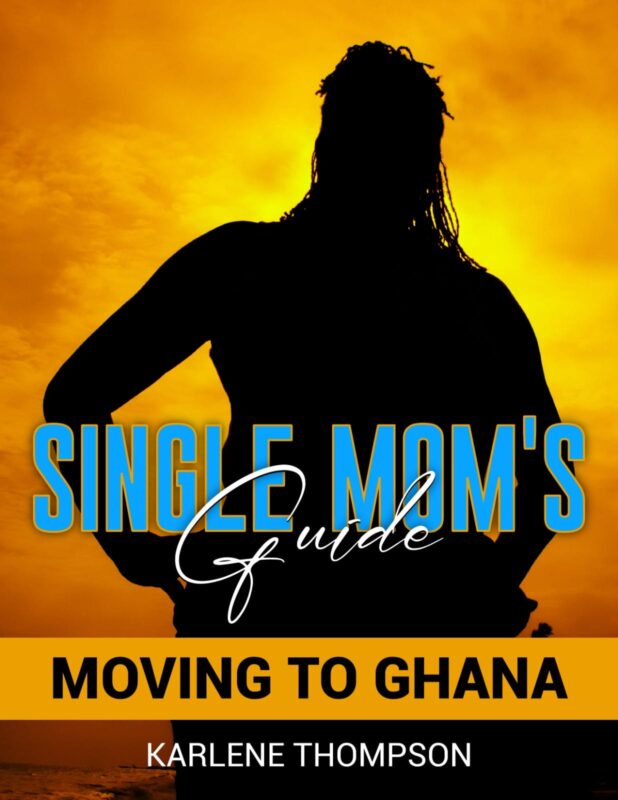
Navigating the complexities of international relocation, particularly with children in tow, can be daunting. Karlene Thompson’s “Single Mom’s Guide: Moving to Ghana” chronicles her personal journey of starting anew in Ghana with her two young sons, offering valuable insights for those contemplating a similar new start.
Drawing from her own experiences, Thompson candidly shares the practical steps she took to successfully establish a transformative, happy, and secure home for herself and her children in Ghana.
Thompson’s conversational tone makes the book easily accessible, while detailed checklists guide readers through crucial steps of the relocation process. Topics covered include pre-move planning, passports and visas, financial considerations, housing, healthcare, education, cultural assimilation, and more.
This concise book serves as an indispensable resource for single moms, (and dads too) contemplating a move abroad.
Whether you’re a single mom or dad with a ‘thirst for new experiences and a desire to provide her (your) children with a truly unique upbringing,’ “Single Mom’s Guide: Moving to Ghana” comes highly recommended.
Ready to explore the world, express yourself through writing, or live your best life after 50?
Whether you’re here for the inspiration, the tips, or the free guide, you’re in the right place. When you sign up, you will receive inspiring reflections and gentle prompts that invite you to travel deeper, write boldly, and live more fully—wherever you are on your journey as a welcome gift, you’ll also get my free guide: Travel Deeper, Write Boldly, Live Fully — packed with ideas to help you travel with purpose, write what’s in your heart, and live fully in this season of life. Sign up now to stay connected, get inspired, and grab the guide (or not — it’s totally up to you).
Blaxit: Black Americans Exit America
Some Black Americans are leaving and they are not coming back
Blaxit is the word used to describe the latest migration of Black people in America to other countries. In this article, I use the term Black people to refer to African Americans and People of African Descent.
Past migrations
This is not the first time that Black people in America have migrated en masse. After slavery in America ended in 1865, Black people moved steadily from the American south to the north.
Why? They moved because the north represented freedom from the extreme violence and oppression that continued to exist in the south after slavery.
Black people began moving in the late1800s which led to two waves of Great Migrations. By the end of the second Great Migration in 1970, six million Black people had left the south.
Ironically, Black people in America are still searching for that seemingly elusive safety and promising future.
Blaxit in a nutshell
Brexit, the term used for withdrawal of the UK from the European Union, was modified to Blaxit in 2016 by Ulysses Burley III to describe the exit of Black people from America.
Blaxit in a nutshell, is the growing movement of Black people leaving America in search of friendly, welcoming countries where it is less stressful, less racist, less violent and less murderous than America.
Where Black people are going
Some people have already decided that their new home will be in an African country and Ghana, The Gambia, South Africa, and Tanzania are some popular choices.
Others are looking to countries such as Canada, Mexico, Costa Rica, Panama, and as far away as Australia and New Zealand.
Not for everyone
But Blaxiting is not for everyone. For many it’s not so clear cut. Sometimes making a choice to leave America means leaving family behind because not all family members want to leave.
Some make the heart-wrenching decision to leave anyway and resolve to return to America periodically to visit family.
And for many others, the very idea of leaving America permanently is unthinkable. They are Americans. America is their home and no one is going to make them feel like they have to leave their own country.
Blaxiting is the best option for some people, but not for others. For those who choose the Blaxit journey, the key to success is to do your research and then make the informed decision that is best for you.
Ready to explore the world, express yourself through writing, or live your best life after 50?
Whether you’re here for the inspiration, the tips, or the free guide, you’re in the right place. When you sign up, you will receive inspiring reflections and gentle prompts that invite you to travel deeper, write boldly, and live more fully—wherever you are on your journey as a welcome gift, you’ll also get my free guide: Travel Deeper, Write Boldly, Live Fully — packed with ideas to help you travel with purpose, write what’s in your heart, and live fully in this season of life. Sign up now to stay connected, get inspired, and grab the guide (or not — it’s totally up to you).
7 Incredibly Insensitive Things People Do When They Visit Africa
You’ve done the research, read the travel guides and watched the documentaries about Africa.
You’ve decided. You’re going to Africa. You’ve got your ticket, visa and have had your shots. You’re ready. You know everything that you need to know.
But here’s the thing. You don’t know everything that you need to know. There are some things you can’t know.
More nuanced things.
Like what you should know before you travel to any African country because by not knowing, you risk inadvertently doing or saying something that is offensive.
And whether you know it or not, it will affect the quality of your dream vacation to Africa.
So how do you make sure that your African vacation is everything that you hope and dream it will be? Here’s a clue. It’s about attitude.
Some attitudes are incredibly insensitive. Here are 7 main ones that should never travel with you to Africa.
1. Bringing Along Pre-Conceived Notions of Africa and Africans
Let’s face it. Consciously or not, we’re all influenced by mainstream media to some extent. When it comes to Africa, what’s often portrayed is extreme poverty, backwardness, unsophisticated uneducated people, needy governments and so on.
But Africa is so much more than that. It is many countries (54), many people and many cultures.
Traveling to Africa with pre-conceived notions is like packing more than you need for a trip and ending up paying costly excess baggage fees for stuff you didn’t even need.
Leaving the extra baggage at home will free you up have a much richer vacation experience in Africa.
2. Taking Photographs of Children Without Permission
How would you feel if a stranger started taking photos of your child and then posted those photos on social media? Without your permission.
But yet for some reason, many visitors to Africa seem to think that it’s okay to do just that. It is not.
The best thing to do is simply ask if its okay to take that picture. 99% of the time the parents will say okay. And because you asked, the quality of your interaction with that parent is enhanced and you will be made to feel even more welcome.
3. Expecting Immediate Acceptance
For many descendants of Africans living in the Diaspora, Africa is viewed as the Motherland. They feel a special kinship or connection with Africa and Africans based on genetic heritage and expect Africans to the feel the same way about them.
So when African descendants are referred to as foreigners or strangers, hurt feelings, resentment and behaviors arise that negatively impacts the quality of interactions between people.
If you’ve ever felt this way, try not to take it personally. Give it some time. Get into good conversations. Learn from, and about each other. If you do this, your vacation is guaranteed to be all the more enjoyable and enlightening.
4. Assuming a Savior Mentality
A couple was considering relocating to an African country, however a video showed them complaining about not feeling fully welcome.
As footage rolled, it seemed that everywhere they went — the market, for a walk, at a restaurant — they constantly pointed out what needed to be done, how and why.
Resist the urge to lecture. Ask questions instead and you’ll find that people are happy to engage in friendly lively discussions with you as opposed to polite and silent tolerance.
5. Nickel and Dime-ing
What’s a vacation without photos and souvenirs to remember it by?
You can buy African souvenirs at market stalls, arts and crafts shops or from street vendors along the roadside. But no matter where you buy, expect to bargain.
Everyone bargains, including tourists. It can be great fun haggling over prices. But it can be no fun at all if you feel that the seller is out to cheat you big time.
Here’s what to do to be fair to the seller and at the same time not be taken advantage of. Start by offering 45% less than the asking price, then bargain back and forth amicably until you and the seller agree on a price.
6. Ignoring Cultural Rules
Vacation is a time to relax and let loose. For sure. But at the same time you don’t want to do anything that constitutes a flagrant disregard of the social or cultural norms of the country you are visiting.
This includes ways of dressing, especially women, and public display of affection. The further away you move from cities and towns, the more traditional and conservative it gets.
A good rule of thumb is to check out what other people are wearing, and how couples behave in public, tourists and Africans alike. Let that be your guide.
7. Speaking Too Loudly
Maybe it’s human nature to speak a little louder than usual when you’re not sure that someone understands you. Or to speak noticeably slower, or with exaggerated enunciation of words, or worse yet, do all three at the same time.
But speaking this way will actually make people wonder what is wrong with you. If you’re visiting an English-speaking (Anglophone) African country, chances are that most people you run across, especially in cities and towns, will have a good grasp of the English language.
Using a raised voice in normal conversation is jarring on the receiving end. Speaking in a normal tone of voice is always the best way to go.
Now You Know
You are aware of the 7 insensitive attitudes that many people unwittingly take along with them when they visit an African country.
All that’s left now is for you to get on board, fasten your seat belt, relax and enjoy your flight.
When you arrive at Destination Africa, you’ll be met by some of the world’s friendliest, most welcoming people.
And one thing you’ll know for sure is that you won’t be offending your hosts by making any insensitive mistakes. You’ll feel confident and free as you learn about and enjoy all that Africa has to offer.
Originally published at http://www.travellearnafrica.com on May 18, 2020
Ready to explore the world, express yourself through writing, or live your best life after 50?
Whether you’re here for the inspiration, the tips, or the free guide, you’re in the right place. When you sign up, you will receive inspiring reflections and gentle prompts that invite you to travel deeper, write boldly, and live more fully—wherever you are on your journey as a welcome gift, you’ll also get my free guide: Travel Deeper, Write Boldly, Live Fully — packed with ideas to help you travel with purpose, write what’s in your heart, and live fully in this season of life. Sign up now to stay connected, get inspired, and grab the guide (or not — it’s totally up to you).